
Custom Luxury Gift Boxes: How to Choose the Right Structure, Materials and Finishes
Choosing luxury gift packaging starts with more than appearance. Learn how product dimensions, box structure, materials, inserts, branding, finishes, quantity and storage requirements work together when developing custom luxury gift boxes.
 Published June 25, 2026
Updated August 31, 2026
13 min read
A luxury gift box should not begin with foil color, ribbon or even a box style.
It should begin with what needs to go inside.
A single perfume bottle, jewelry set, candle collection and corporate gift kit can all require premium presentation, but their packaging needs are very different. Product dimensions, total packed weight, fragility, number of items, opening experience and delivery method influence the structure long before decorative finishes are selected.
The best custom luxury gift boxes bring those decisions together in the right order.
This guide explains how to move from the products being gifted to a finished packaging specification without making the box unnecessarily complicated.
Start With the Complete Gift Arrangement
Measure everything that will be packed inside the box before choosing its external dimensions.
That includes the primary products as well as accessories such as cards, booklets, samples, cables, pouches or promotional items.
For every component, record:
-
Length, width and height
-
Weight
-
Fragile or delicate surfaces
-
Orientation inside the box
-
Whether it needs its own compartment
-
How the recipient should remove it
For bottles and jars, measure the widest point including caps, pumps and lids.
For apparel, determine whether the product will be folded, wrapped in tissue or positioned inside a tray.
For a multi-product gift set, arrange the actual products together before finalizing the box.
The finished layout should determine the package rather than forcing the products into a structure chosen too early.
Decide What the Opening Experience Should Feel Like
The box structure controls how the recipient first encounters the gift.
Some structures reveal everything at once. Others create a slower sequence.
Magnetic Closure Boxes
A hinged magnetic box keeps the lid connected to the base and creates a controlled opening action.
It can work well when the inside lid is part of the presentation or when the box may be reused for storage.
The hinge, magnet position and lid weight should work together so the closure feels secure without becoming difficult to open.
Two-Piece Gift Boxes
A separate lid and base provide a classic gift-box experience.
The depth of the lid affects how quickly the product is revealed. A shallow lid comes away quickly, while a deeper lid creates more overlap and a slower opening.
Two-piece structures can suit anything from jewelry and candles to apparel accessories and confectionery when the proportions are designed around the product.
Drawer and Sleeve Boxes
A sliding tray creates a gradual reveal.
The tray needs enough clearance to move smoothly inside the sleeve without becoming loose.
Drawer structures work especially well when the products can be presented horizontally and remain secured during movement.
Collapsible Luxury Boxes
A collapsible structure can provide a substantial appearance after assembly while requiring less storage space before use.
This can be useful when packaging is stored in larger quantities.
The assembly method should still be tested so corners remain square and the finished box closes consistently.
Premium Folding Cartons
Not every premium product requires a rigid setup box.
High-quality folding paperboard can create a refined package for lighter products while offering flatter storage and relatively simple assembly.
The appropriate choice depends on the product rather than the assumption that luxury packaging must always use the heaviest construction.
Compare Structures by Practical Requirements
Instead of asking which style looks the most luxurious, compare what each structure needs to accomplish.
| Box Structure | Best When | Main Detail to Check |
|---|---|---|
| Magnetic closure | Controlled hinged presentation is important | Magnet strength and lid alignment |
| Two-piece lid and base | A classic removable-lid reveal is preferred | Lid depth and opening resistance |
| Drawer and sleeve | A gradual sliding reveal suits the product | Tray clearance |
| Collapsible rigid | Storage space matters before assembly | Corner and panel stability |
| Premium folding carton | Product is lighter and flat storage is useful | Board strength and closure |
| Book-style box | Interior lid presentation is important | Hinge and opening angle |
A structural sample can help determine which experience works best with the actual gift arrangement.
Choose Material According to Structure and Weight
The material should support the package physically and visually.
Rigid greyboard or chipboard is commonly used as the structural core of premium setup boxes. It provides firmness and can be wrapped with printed, colored or textured papers.
Folding paperboard offers a lighter alternative and can be suitable when the product does not require the thickness of a rigid structure.
Corrugated material may be appropriate for larger gift sets or packaging that requires greater resistance to handling.
Kraft board and natural paper surfaces can support brands that want a warmer, paper-focused appearance.
The strongest or thickest option is not automatically the best one.
Material selection should reflect:
product weight + box dimensions + structure + presentation + handling
Treat the Exterior Wrap as Part of the Design
On many rigid gift boxes, customers see the wrapping paper rather than the structural board beneath it.
That visible surface can change the entire character of the package.
Smooth papers can support detailed printing and clean typography. Textured wraps can create tactile interest with less artwork. Uncoated papers can produce a softer appearance, while pearlescent or metallic surfaces create stronger visual effects.
Specialty paper should be tested before production when it plays an important role in the design.
Texture can affect fine printing, foil details, folds and corner wrapping.
A material swatch may look attractive when flat but behave differently once wrapped around the complete box.
Design the Insert Around Product Position
The outer box creates the first impression, but the insert determines what customers see after opening it.
Each product should have a clear position.
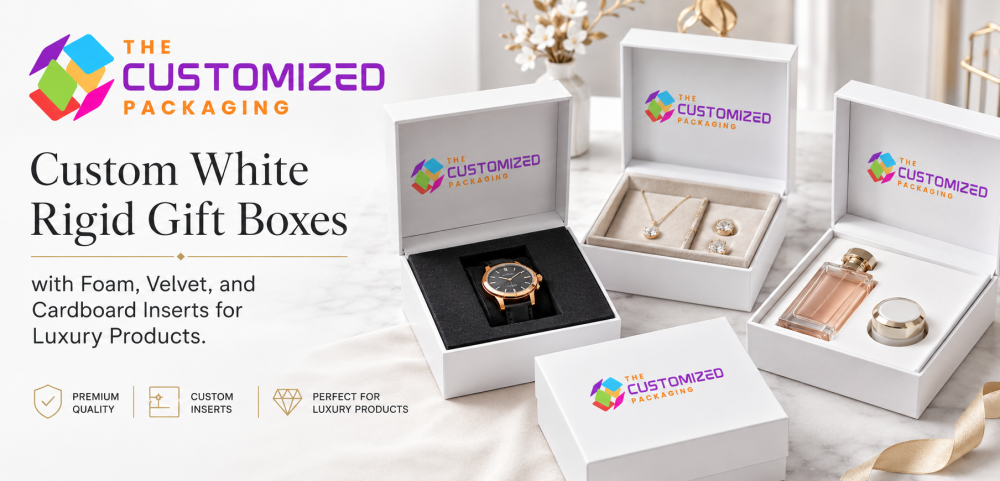
A perfume bottle may need a collar or recessed platform. Jewelry may require a fitted holder. A candle needs support based on its filled weight and vessel dimensions. A corporate kit may need several compartments for products of different sizes.
Common support approaches include paperboard platforms, dividers, molded pulp, corrugated supports and fitted cushioning materials.
The right insert should:
-
Limit unnecessary movement
-
Keep products facing the intended direction
-
Separate items that could damage one another
-
Avoid rubbing against important labels or finishes
-
Allow comfortable product removal
-
Maintain a clean visual arrangement
The insert does not need to fill every available space.
It needs to control the products that matter.
Leave Enough Room for Product Removal
A perfectly fitted cavity can still create poor packaging if customers cannot remove the item comfortably.
This is especially important with bottles, candles, electronics and other products that sit deeply inside an insert.
Finger notches, ribbon lifts, open sides or accessible grip areas can make removal easier.
Consider how the recipient will physically reach the product before the insert design is approved.
If the only way to remove an item is to pull on its cap, label or delicate component, the fit needs improvement.
Use Printing to Establish the Brand Hierarchy
The box does not need to display every available message on its exterior.
The most important brand elements should be easy to recognize first.
A typical hierarchy may include:
-
Brand
-
Product or collection
-
Campaign or gifting message
-
Supporting information
Secondary content can appear inside the lid, on a card, on a belly band or elsewhere in the presentation.
This keeps the exterior from becoming crowded while giving additional information an intentional location.
Choose Printing According to the Artwork
Printing method should follow the design requirements rather than being selected only by name.
Detailed illustrations, photographs, gradients and full-color artwork require different production considerations from a single-color logo.
The selected surface also matters.
Artwork printed on smooth white paper behaves differently from the same artwork printed on brown kraft or a deeply textured wrap.
If exact brand colors are important, evaluate the artwork on the actual proposed material.
The finished box—not the digital file—is what the customer ultimately sees.
Use Premium Finishes Selectively
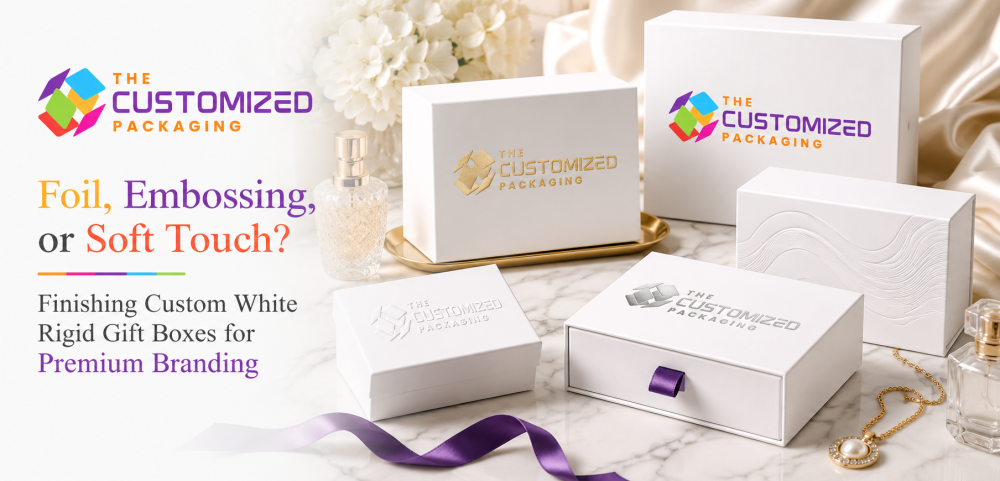
Foil stamping, embossing, debossing, spot gloss and tactile coatings can add visual or physical contrast.
They work best when each finish has a purpose.
Foil can emphasize a logo or product name.
Embossing can bring dimension to a symbol or pattern.
Debossing can create understated tactile branding.
Selective gloss can highlight one part of otherwise matte artwork.
Using several strong effects together does not automatically make a package feel more premium.
Often, one controlled finishing detail has more impact than four competing ones.
Match the Box to the Product's Price Position
Packaging should support the product rather than create a mismatch with it.
A substantial rigid package may make sense around a high-value fragrance, jewelry set or executive gift.
A lightweight promotional product may be better served by a refined folding carton instead of an oversized setup box.
The objective is not maximum material.
It is appropriate presentation.
The finished package should feel believable for the product's selling price, gifting occasion and customer expectation.
Control the Size Before Controlling the Decoration
Oversized luxury packaging can create unnecessary cost without improving the customer experience.
A larger box can require more structural board, more wrap material, a larger insert, larger shipping cartons and additional storage space.
It can also make smaller products look visually lost.
Right-sizing should account for the complete gift arrangement while keeping the presentation intentional.
Enough space should remain for product protection and removal, but empty volume should have a reason to exist.
Understand What Changes the Price
There is no useful universal price for a custom luxury gift box because the complete specification determines the cost.
The main variables include:
-
Finished dimensions
Structure
Board and wrapping material
Insert design
Printing coverage
Specialty finishes
Closures and ribbons
Number of artwork versions
Assembly requirements
Quantity
Packing and delivery requirements
A simple rigid lid-and-base box with restrained branding has a different production path from a magnetic box using specialty wrap, foil, several compartments and interior printing.
For an accurate comparison, keep the specifications consistent between quotations.
Otherwise, a lower price may simply represent a different box.
Decide Which Premium Features Actually Matter
When managing a packaging budget, prioritize the features customers will notice or the product genuinely needs.
For one project, the insert may be essential because several glass bottles need to remain separated.
For another, the exterior paper and typography may contribute more to the presentation than an elaborate closure.
A useful priority order is:
product fit → structural performance → presentation → branding → decorative finishing
If the budget changes, simplify decorative features before compromising the product fit or basic function of the box.
Plan Wholesale Quantities Around Real Usage
A lower unit price at a larger quantity is only valuable when the boxes will actually be used.
Before increasing an order, consider:
-
Forecasted product sales
-
Storage capacity
-
Upcoming artwork changes
-
Seasonal collections
-
Product dimension changes
-
Number of SKUs
-
Expected reorder schedule
If several gift sets share the same dimensions, one common outer structure may sometimes support different inserts, sleeves, labels or artwork versions.
This can create consistency across a packaging program without requiring a completely different structure for every variation.
Think About Storage Before Ordering
Rigid setup boxes normally occupy their finished volume during storage.
That matters when hundreds or thousands of boxes are involved.
Collapsible structures or folding cartons can reduce storage requirements, but they introduce assembly before packing.
The relevant cost is therefore not only the unit price.
Consider the complete workflow:
purchase → incoming freight → storage → assembly → packing → final delivery
The most economical structure on a quotation may not be the most efficient one inside your operation.
Separate Gift Presentation From Shipping Protection
Luxury gift packaging and courier packaging perform different jobs.
A rigid gift box with a specialty paper wrap may provide an excellent customer presentation but still require protection during parcel delivery.
Fragile or high-value products may need a corrugated outer shipping box, cushioning, corner protection or other transit components around the gift package.
Designing these layers separately allows the presentation box to remain focused on the recipient experience.
Review Sustainability at the Component Level
A natural appearance does not automatically make a package environmentally preferable.
Look at the complete construction.
A luxury box may combine paperboard, wrapping paper, magnets, foam, film, ribbon, coatings and adhesives.
If reducing material complexity is important, consider whether some components can be simplified, removed or replaced with suitable paper-based alternatives.
Environmental claims should be based on the actual materials used rather than appearance alone.
Sample the Complete Package Before Production
A physical sample is one of the most useful steps in developing custom luxury packaging.
Test it with the actual products whenever possible.
Luxury Gift Box Approval Checklist
Confirm that:
-
Every product fits in its intended position
-
The complete packed weight is properly supported
-
Products do not collide or rub
-
Important labels remain protected
-
Items are easy to remove
-
The box opens and closes smoothly
-
Hinges, magnets or drawers perform correctly
-
Printed colors suit the selected surface
-
Decorative finishes are accurately positioned
-
The closed package remains aligned
-
The complete gift arrangement looks balanced
-
The packaging can be stored and packed efficiently
-
Suitable outer protection is available when shipping is required
A box should be approved as a complete packaging system rather than as artwork, structure and insert separately.
Frequently Asked Questions About Custom Luxury Gift Boxes
What are custom luxury gift boxes?
Custom luxury gift boxes are premium packaging structures developed around specific products, dimensions, branding and presentation requirements. They may use rigid construction, premium folding board, specialty wraps, fitted inserts and selected decorative finishes.
Which box style is best for luxury gifts?
There is no single best style. Magnetic, two-piece, drawer, collapsible and premium folding structures create different opening experiences and suit different products, weights and storage requirements.
What material is used for luxury gift boxes?
Many premium setup boxes use rigid greyboard or chipboard wrapped with decorative paper. Folding paperboard, kraft and selected corrugated constructions may also be used depending on the product and box design.
Do luxury gift boxes need custom inserts?
Not always. Inserts are useful when products need to remain positioned, separated or raised for presentation. A simple apparel gift may require less internal structure than a set of glass bottles or electronics.
What affects custom luxury gift box pricing?
Dimensions, structure, materials, inserts, printing, finishes, closures, quantity, assembly and delivery requirements all influence the final price.
Are larger wholesale quantities always better?
No. Higher quantities may improve unit economics, but businesses should also consider storage, artwork changes, product updates and actual usage before ordering more packaging than necessary.
Should luxury gift packaging be sampled before production?
Yes. A physical sample can confirm product fit, opening behavior, insert performance, material appearance, printing and overall presentation before the full run is approved.
Build the Luxury Box From the Product Outward
The strongest custom luxury gift boxes are not created by starting with the most expensive structure or the longest list of finishes.
They are developed in a logical sequence.
Begin with the products. Establish the arrangement. Select a structure that creates the right opening experience. Choose materials that support the weight and brand position. Design the insert around the products, then add printing and finishing where they contribute real value.
Finally, evaluate quantity, storage, packing and shipping before approving production.
Following that sequence creates packaging that looks premium because every part has a reason to be there.
The Customized Packaging develops custom luxury gift boxes around your product dimensions, gift arrangement, preferred presentation, branding and quantity requirements. Share your specifications and artwork to create packaging built around the complete gifting experience.