How to Package Lingerie for Discreet Ecommerce Shipping
Online lingerie orders often need privacy during delivery without sacrificing the presentation inside. Learn how to separate the outer shipping layer from the inner product package, organize labels and paperwork, and make returns easier for customers.
 Published June 09, 2026
Updated September 07, 2026
14 min read
Discreet lingerie packaging is not about making the product invisible after the customer opens the parcel. It is about separating what needs to be visible during shipping from what should be revealed inside.
For many ecommerce lingerie and underwear brands, that means using two different packaging layers.
The outer shipping package handles delivery labels, carrier handling and privacy during transit.
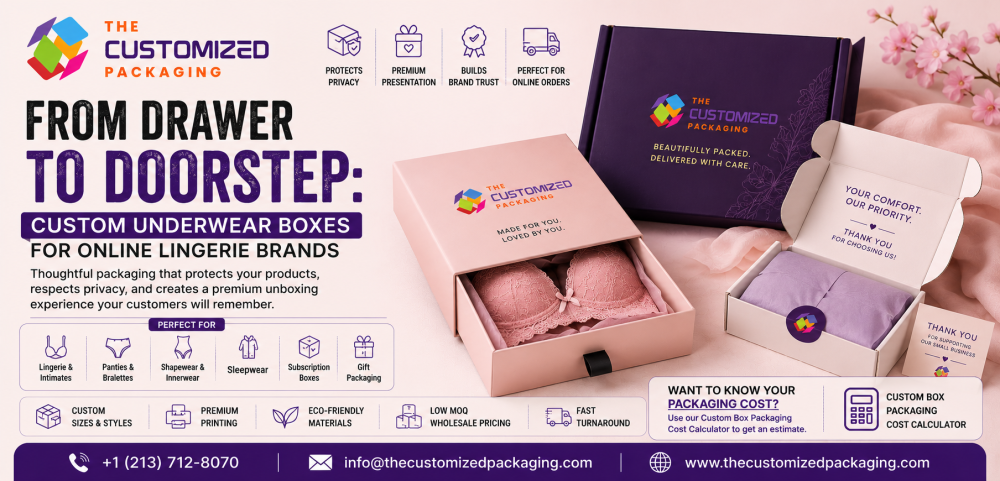
The inner product package organizes the garments, carries the brand identity and presents the order after the customer opens the parcel.
That separation can be useful for underwear, lingerie, shapewear, bralettes, boxer briefs, intimate gift sets and other products where customers may prefer a neutral exterior.
Brands selling these products should design the packaging journey from warehouse shelf to doorstep rather than treating the retail box and shipping mailer as the same thing.
Start by Separating the Inner and Outer Packaging Jobs
A useful ecommerce packaging system gives each layer a clear role.
| Packaging Layer | Main Job | Typical Information |
|---|---|---|
| Outer shipping mailer or carton | Transit protection and delivery | Carrier label, required sender information and routing labels |
| Inner underwear or lingerie box | Product presentation and organization | Brand, product name, size, care information and artwork |
| Garment wrap or tissue | Product separation and presentation | Minimal or no printed information |
| Insert card | Supporting customer information | Care, returns, exchanges or QR code |
Not every order needs all four layers.
The right combination depends on the garments, shipping method and presentation requirements.
Why the Outer Package May Need to Stay Neutral
An ecommerce shipping box travels through carriers, reception areas, apartment buildings, offices and shared households before reaching the customer.
Some shoppers may prefer that the exterior does not clearly identify the contents as lingerie or intimate apparel.
A plain or minimally branded outer package can help create a more discreet delivery experience.
That does not mean the package should omit information legally or operationally required by the carrier.
The goal is simply to avoid unnecessary product-specific wording or graphics on the shipping exterior.
For example, the carrier label may need the sender information required by the chosen shipping service, but the carton itself does not necessarily need large lingerie imagery or intimate-product descriptions.
Keep the Branded Experience Inside
A discreet exterior does not require the entire order to be plain.
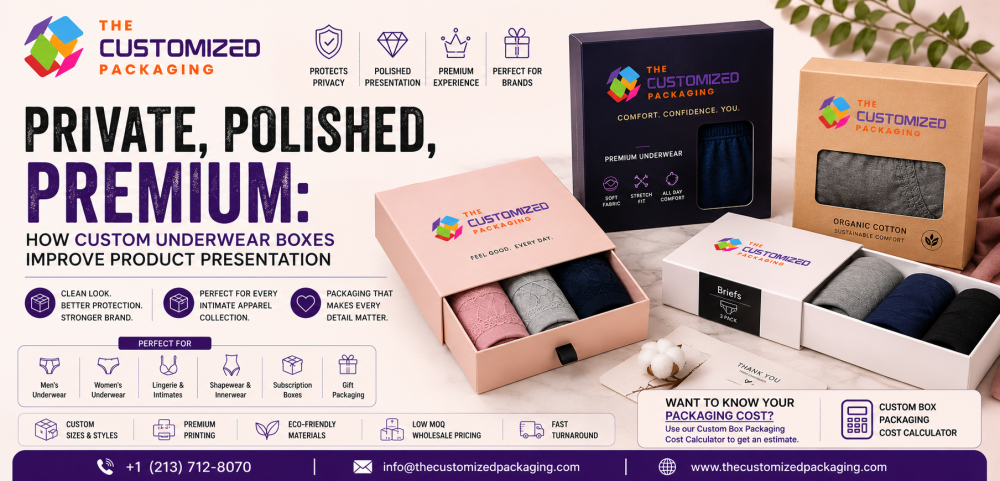
Once the shipping package is opened, the inner custom underwear boxes can carry the brand identity.
That inner packaging may include:
-
Logo
-
Product or collection name
-
Size
-
Color
-
Style
-
Care information
-
QR code
-
Interior message
-
Printed artwork
This creates a clear separation:
Outside: practical and discreet
Inside: branded and product-focused
For ecommerce brands, this can be more useful than trying to make one highly decorative retail carton perform every shipping function.
Decide Whether You Need an Inner Box at All
Not every underwear order needs a separate presentation box.
A lightweight everyday garment may be adequately packed using a suitable garment wrap or paper band inside a protective ecommerce mailer.
A separate inner carton becomes more useful when the product needs:
-
A structured presentation
-
Multipack organization
-
Retail-ready packaging
-
A gift-ready format
-
Size or style information on the carton
-
Additional protection for delicate details
-
A reusable storage format
-
Separation from other products in the same order
Do not add a second box merely because more packaging seems more premium.
Each layer should solve a real packaging or presentation problem.
Match the Outer Mailer to the Complete Order
The shipping package should be selected after the inner product arrangement is known.
Measure the complete packed order rather than one unfolded garment.
That includes:
-
Folded underwear or lingerie
-
Inner box where used
-
Tissue or wrap
-
Cards
-
Multiple garments
-
Accessories
-
Return or exchange materials
A mailer that is substantially larger than the complete order can allow the contents to move unnecessarily.
One that is too tight can compress the inner box or crease the product presentation.
For broader garment-fold and mailer-sizing considerations, custom mailer boxes for ecommerce apparel covers the shipping-box side of apparel fulfillment in more detail.
Keep Product Descriptions Off the Shipping Exterior When Privacy Matters
Review every element visible before the parcel is opened.
That includes:
-
Printed carton artwork
-
Promotional stickers
Shipping labels
Warehouse labels
SKU descriptions
Return labels
Customs documentation where applicable
A plain carton can still reveal sensitive product information if a warehouse sticker says “lace lingerie set” in large text.
Use operational codes where practical while still meeting the requirements of your shipping, inventory and customs systems.
Privacy should be considered across the complete fulfillment workflow, not only in the graphic design.
Review the Sender Name Customers Will See
Some businesses use a legal company name that clearly identifies the product category, while others use a more neutral corporate or fulfillment name.
Do not change required sender information simply to disguise a shipment.
Instead, review what customers will actually see on:
-
Carrier labels
-
Tracking pages
-
Delivery notifications
-
Return labels
-
Bank or order communications where relevant
If discretion is part of the customer promise, the website should clearly explain what the shipping package will and will not display.
Accurate expectations are better than promising “completely anonymous” delivery when the carrier still needs legitimate sender and routing information.
Decide What Goes Inside the Product Package
The inner carton should not become overloaded simply because the exterior is plain.
Useful product information may include:
-
Product name
-
Size
-
Style
-
Color
-
Fabric information
-
Care guidance
-
Quantity
-
Barcode or SKU
-
Brand-approved claims
The exact content depends on whether the same box is used for retail, ecommerce or both.
If the carton already needs several size and style variants, make sure artwork versioning is controlled carefully during fulfillment.
Keep Size Identification Easy to Find
Underwear and lingerie ecommerce involves a high number of product variations.
One style may exist across several:
-
Sizes
-
Colors
-
Cuts
-
Fabrics
-
Multipack configurations
Warehouse staff need to identify the correct SKU without repeatedly opening finished product packaging.
Use a consistent position for:
-
Size
Style code
Color
Barcode
SKU
This can improve packing accuracy while keeping the customer-facing design organized.
Protect Delicate Fabrics Without Making Unsupported Claims
Packaging can help keep garments organized and reduce unnecessary contact during fulfillment and shipping.
However, an ordinary underwear box should not automatically be described as:
-
Sterile
-
Contamination-proof
-
Moisture-proof
-
Antimicrobial
unless the complete packaging system has actually been designed and verified for those properties.
The current underwear packaging specifications correctly treat the carton as secondary packaging rather than automatically sterile or moisture-proof.
For lace, satin, embroidery or other delicate surfaces, focus instead on preventing snagging, excessive movement and contact with hard accessories.
Use Tissue or Wrap When It Has a Purpose
Tissue can help organize the garment and create separation between the product and the inside of the carton.
It can also help maintain a consistent fold.
But it should not become a substitute for correct sizing.
If the box is so large that several layers of loose tissue are required merely to stop the garment from moving, review the dimensions first.
The same applies to pouches and paper wraps.
Use them when they genuinely support the product or presentation.
Multipacks Need a Repeatable Arrangement
A three-pack or five-pack behaves differently from a single garment.
Decide how the products will sit before designing the inner carton.
Common arrangements include:
-
Stacked
-
Side by side
-
Individually banded
-
Layered
-
Divided into sections
A simple divider or custom packaging insert may help when several products need clear separation.
For soft garments, however, an elaborate fitted cavity is often unnecessary.
The first priority is a repeatable fold and an appropriately sized package.
Think About Returns Before Printing the Packaging
Underwear and lingerie return policies can vary depending on the retailer, product and applicable rules.
Do not print a detailed return policy directly onto thousands of boxes if that policy may change.
Instead, consider using:
-
QR code
-
Short web address
-
Return information card
-
Customer account instructions
This allows the business to update the policy online without making existing packaging obsolete.
The package should make it easy for the customer to find current information without stating rules that may later become outdated.
Separate Returns From Product Care
Return instructions and care instructions solve different customer problems.
Product care may include laundering or garment-care information approved by the brand.
Return or exchange information explains what the customer should do when the product is not the correct size or style.
They can be placed on different surfaces.
For example:
Inside carton: product and care information
Small card or QR code: exchange and return instructions
Keeping them separate makes both easier to understand.
Consider Reusable Outer Packaging Only When It Helps the Workflow
Some ecommerce mailers use tear strips or a second adhesive strip so the same outer package can be used for a return.
That can simplify the process where the retailer offers returns or exchanges that use the original shipping package.
But the feature only helps when:
-
The package remains intact after opening
-
The return policy permits the product to be sent back
-
The customer has clear instructions
-
The second closure works with the shipping method
Do not add a return strip automatically if the actual return workflow does not use it.
A Discreet Return Journey Matters Too
Privacy does not stop after the first delivery.
If customers need to return or exchange a product, the return package may pass through the same shared spaces as the original shipment.
Where appropriate, the return process should preserve a similar level of discretion.
That may mean allowing the customer to reuse the plain outer mailer rather than requiring them to expose the branded inner box during return shipping.
The exact process should match the retailer's return policy and carrier requirements.
Avoid Large Lingerie Branding on the Outer Shipper by Accident
One common mistake is designing a discreet outer mailer and then adding a large branded sealing tape or promotional sticker that reveals the product category.
Review the complete package after all fulfillment materials have been added.
That includes:
-
Tape
-
Stickers
-
Labels
-
Packing slips
-
Promotional cards visible through openings
-
Shipping documentation
The final parcel is what the customer and everyone handling it will see.
Use Tamper-Evident Features Only for the Right Reason
A tear strip, label seal or perforated tab can show that the package has been opened.
That can be useful for some ecommerce workflows.
But tamper evidence should not be confused with product sterility or guaranteed security.
The purpose is narrower:
to provide a visible opening indication where the structure supports it.
Choose the feature according to the actual fulfillment need.
Keep the Interior Branded Without Overpacking It
A plain outer mailer often gives the brand more freedom inside.
The reveal may include:
-
Printed inner box
-
Tissue
-
Product card
-
Simple message
-
Care information
That does not mean every element needs branding.
One strong printed inner package may create a cleaner experience than logos on the box, tissue, sticker, card, ribbon and every other component.
Keep the system controlled.
Ecommerce Lingerie Packaging by Order Type
| Order Type | Practical Packaging Approach |
|---|---|
| Single everyday underwear item | Compact inner wrap or carton inside suitable shipping mailer |
| Premium lingerie set | Branded inner box inside plain protective shipper |
| Underwear multipack | Sized carton with organized stacked or divided arrangement |
| Shapewear | Folded product package with enough depth for fabric bulk |
| Bridal or gift lingerie | Presentation box inside discreet outer shipping carton |
| Subscription order | Repeatable mailer system with controlled internal presentation |
| Mixed apparel order | Outer mailer sized around the complete garment bundle |
These are starting points.
The final packaging should be based on the actual folded products, number of items and intended presentation.
Build Privacy Into the Packing Station
A privacy-focused design can still fail if the fulfillment process is inconsistent.
Document what happens at the packing station.
A practical sequence may be:
-
Verify the correct product and size
-
Fold the garment consistently
-
Add the inner product packaging
-
Add care or return information
-
Place the product into the outer mailer
-
Confirm no unnecessary product description is visible externally
-
Apply the carrier label in the intended area
-
Seal the shipment
-
Complete final SKU and address check
The goal is repeatability.
Staff should not need to decide from memory whether a particular order requires a discreet exterior.
Test the Complete Parcel, Not Just the Inner Box
Before standardizing packaging, prepare a realistic ecommerce shipment.
Use:
-
Actual garments
-
Inner box
-
Tissue or wrap
-
Cards
-
Outer shipping package
-
Shipping label
-
Tape or seals
Then evaluate:
-
External discretion
-
Inner presentation
-
Product movement
-
Carton compression
-
Label placement
-
Opening process
-
Return usability
-
Overall packed size
A good-looking inner box does not guarantee that the complete parcel works well.
Discreet Ecommerce Packaging Checklist
| Check | What to Confirm |
|---|---|
| Outer packaging | Does not unnecessarily identify intimate apparel |
| Shipping label | Contains required carrier information without avoidable product wording |
| Inner packaging | Holds and identifies the product correctly |
| Fold | Repeatable across fulfillment staff |
| SKU | Size, color and style easy to verify |
| Garment protection | Delicate materials separated where needed |
| Customer information | Care and return instructions easy to find |
| Return process | Matches the retailer's actual policy |
| Branding | Concentrated primarily inside where appropriate |
| Sample shipment | Complete parcel tested before rollout |
Common Mistakes in Ecommerce Lingerie Packaging
Treating the Retail Box as the Shipping Box
A lightweight presentation carton may not be appropriate for direct carrier handling.
Printing Product Details on the Outside
If discretion matters, avoid unnecessary lingerie-specific wording on the shipping exterior.
Promising Complete Anonymity
Carriers may still require legitimate sender and delivery information.
Using an Oversized Mailer
Excess space can allow the inner package to move during transit.
Hiding the Size Code From Warehouse Staff
The package should support accurate picking and packing.
Printing a Return Policy That Changes Frequently
Use an updateable digital destination where appropriate.
Adding Too Many Interior Components
More pieces can increase packing complexity without improving the product experience.
Assuming a Box Is Hygienic or Sterile
An ordinary secondary carton should not make unsupported barrier or hygiene claims.
Frequently Asked Questions
How can an online lingerie brand ship orders discreetly?
A common approach is to use a plain or minimally branded outer shipping mailer with the branded underwear or lingerie packaging inside. Required carrier and sender information should still be displayed as necessary.
Should lingerie branding appear on the outer shipping box?
It can, but brands offering discreet delivery may prefer to keep product-specific branding inside the parcel rather than on the exterior.
Do underwear orders need both an inner box and an outer mailer?
Not always. The need for an inner carton depends on product presentation, retail requirements, garment organization and the amount of shipping protection required.
What should be printed on the inner lingerie package?
Depending on the product, useful information can include the brand, product name, size, style, color, care information, barcode, SKU and QR code.
Can a plain mailer still be branded inside?
Yes. The outside can remain neutral while the interior package, inside print or product card carries the brand identity.
Should return information be printed directly on the box?
Only when the information is unlikely to change. A QR code or web destination may be more practical for policies that can be updated.
Can the same outer mailer be used for returns?
Some ecommerce mailers include a second adhesive strip or reusable closure, but the design should match the retailer's actual return process.
Do lingerie boxes need inserts?
Not always. Soft garments often need consistent folding and correct sizing rather than a fitted insert. Inserts or dividers can help when organizing multipacks, accessories or more complex sets.
Build the Packaging Journey From the Outside In
Discreet ecommerce lingerie packaging works best when the outer and inner layers have separate responsibilities.
Keep the shipping exterior appropriate for delivery. Use the inner package to organize the garment and carry the customer-facing product presentation. Make size identification clear for fulfillment staff, give customers easy access to care and return information, and test the complete parcel rather than only the retail box.
That creates a packaging system that works from the packing table to the doorstep without forcing one carton to perform every job.
If your ecommerce operation needs apparel packaging boxes designed around underwear, lingerie, shapewear or multipack orders, The Customized Packaging can develop the inner and outer packaging around your folded-product dimensions and fulfillment requirements.