Custom Eyelash Packaging: Styles, Fit and Selection
Custom eyelash packaging should be selected around the finished lash product, tray, accessories and sales channel. Compare box styles, materials, windows, inserts, printing and fit requirements for strip lashes, clusters, extensions and complete lash kits.
 Published June 03, 2026
Updated September 07, 2026
13 min read
Custom eyelash packaging should be designed around the finished lash product and tray—not selected from appearance alone. The right package provides enough clearance for the lash fibers, holds the tray in position, presents the lash style clearly and gives the brand appropriate space for identification, instructions and artwork.
Packaging requirements differ between a single pair of strip lashes, magnetic lash kits, clusters, professional extension trays and multipair collections. Understanding those differences helps beauty brands choose a structure that fits the actual product instead of adding unnecessary packaging.
Quick Eyelash Packaging Selection Guide
Before choosing a box, identify these seven requirements:
-
Finished tray length, width and depth
-
Highest point of the lash fibers
-
Number of lash pairs or extension rows
-
Accessories included with the product
-
Whether shoppers need to see the lashes before purchase
-
Retail, salon, ecommerce or gifting use
-
Target presentation level and packaging budget
For brands ready to specify a physical package, custom eyelash boxes can then be developed around these actual product requirements.
What Is Custom Eyelash Packaging?
Custom eyelash packaging is secondary packaging designed around false lashes, lash trays, extension rows or lash kits rather than around a generic box size.
A complete package can contain several components:
-
A lash tray or support that maintains the product position
-
An outer carton, sleeve, drawer or presentation box
-
A window when product visibility is important
-
An insert or compartment for accessories
-
Printed areas for product identification and instructions
-
An outer shipping package when parcel delivery requires additional protection
Not every product needs every component.
A single pair of strip lashes may only require a fitted tray and lightweight folding carton. A magnetic lash kit containing multiple lash pairs, liner and an applicator requires a different internal layout.
Brands building wider makeup collections can also coordinate their lash packaging with other custom cosmetic packaging without forcing every beauty product into the same structural format.
Start With the Lash Product and Tray
The tray is one of the most important dimensions in eyelash packaging because it controls how the lashes sit inside the box.
Measure the finished, loaded tray rather than only measuring the lashes or relying on an empty tray specification.
Check:
-
Maximum tray length
-
Maximum tray width
-
Maximum tray depth
-
Raised edges or outer flanges
-
Highest point of the attached lash fibers
-
Protective tray cover, when used
-
Tabs, labels or grips extending beyond the main tray
The box needs enough clearance to load and remove the tray without forcing it, but excessive internal space can allow the product to move.
Check Lash Fiber Clearance
Long, wispy, dramatic and high-volume lashes may extend substantially above the tray surface.
A box that fits an empty tray can therefore still be too shallow once the lashes are loaded.
Check the completed sample for:
-
Fiber contact with the lid
-
Pressure against a clear window
-
Compression of outer lash corners
-
Movement when the box is turned or gently shaken
-
Contact between lashes and enclosed accessories
Brands working through these measurements in more detail can use our article on tray fit, retail and shipping requirements.
Match the Package to the Lash Type
Different lash products create different structural needs.
| Lash product | Main packaging requirement | Practical direction |
|---|---|---|
| Strip lashes | Maintain band curve and show lash silhouette | Curved tray with folding, sleeve, drawer or window box |
| Magnetic lashes | Organize lashes and companion components | Divided kit box or drawer with accessory sections |
| Lash clusters | Keep multiple lengths or groups identifiable | Labeled rows with a wide tray and clear organization |
| Extension trays | Make length, curl and diameter easy to identify | Long rectangular carton or sleeve around professional tray |
| Multipair sets | Keep several pairs aligned and separated | Divided tray, drawer, book-style or two-piece box |
| Lash gift sets | Present lashes with related tools or products | Structured presentation box with planned compartments |
| Private-label lashes | Create consistent visual identification across styles | Repeatable box system with style-specific labeling |
This product-first approach creates clearer design decisions than choosing one “best” eyelash box for every lash format.
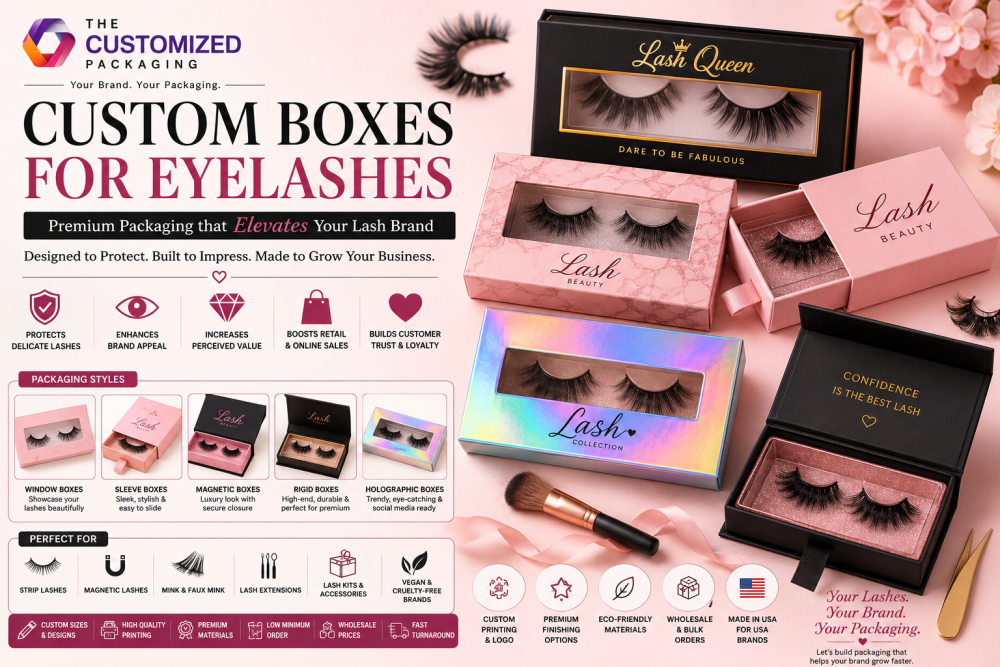
Compare Common Eyelash Box Styles
The structure affects product access, presentation, storage and packaging cost.
| Box style | Suitable applications | Main advantage | Main consideration |
|---|---|---|---|
| Folding carton | Standard strip lashes | Lightweight and efficient | Requires accurate tray fit |
| Window carton | Retail strip lashes | Lets shoppers inspect lash style | Window must align with actual product |
| Sleeve box | Single pairs and branded collections | Clean sliding presentation | Sleeve fit must remain practical |
| Drawer box | Premium or multipair lashes | Controlled reveal and reusable format | Requires easy drawer access |
| Book-style box | Magnetic kits and reusable sets | Space for instructions and accessories | Closure and hinge need testing |
| Two-piece box | Gift sets and premium collections | Classic presentation | Lid depth and product removal matter |
| Rigid box | High-positioned sets | Strong presentation structure | Higher cost, weight and storage volume |
| Hanging carton | Peg-display retail | Uses vertical merchandising space | Hang area must support filled package |
The most elaborate structure is not automatically the best choice. A properly fitted folding carton can be more appropriate than a rigid box for a standard single-pair retail product.
When Should Eyelash Packaging Have a Window?
A window is most useful when viewing the actual lash shape helps the customer choose between products.
Customers may want to compare:
-
Length
-
Density
-
Curl
-
Band shape
-
Cat-eye profile
-
Wispy pattern
-
Cluster arrangement
-
Number of included pairs
The window should expose the feature that matters rather than simply creating the largest possible opening.
For example, a window centered geometrically on the front panel may still perform poorly if the lash tray sits lower inside the box.
Brands developing this feature specifically should use window eyelash packaging to plan sightlines, window size, tray alignment and retail presentation in more detail.
When a Closed Front Can Be Better
A full window is not necessary for every product.
Closed-front packaging can provide:
-
More printable area
-
Greater visual control
-
Less exposure of the internal tray
-
A slower reveal for premium collections
-
More room for product naming and artwork
The decision should depend on whether product visibility before opening actually helps the buyer.
Choose Materials According to Structure and Use
Material selection should follow product weight, box style, window design, presentation level and sales channel.
SBS or Folding Paperboard
Smooth white paperboard works well for lightweight folding cartons, sleeves and window boxes.
It supports:
-
Detailed printing
-
Precise die cutting
-
Product labeling
-
Compact storage before assembly
-
Lightweight retail packaging
Kraft Paperboard
Natural or white kraft paperboard can suit simple, understated or natural-looking brand systems.
Kraft appearance should not automatically be described as environmentally superior. Environmental claims should reflect the actual material composition, sourcing, recyclability and complete package design.
Rigid Board
Rigid board is better suited to presentation boxes, multipair sets and premium kits where a stronger structure is part of the product experience.
Its trade-offs include:
-
Higher unit cost
-
Greater shipping weight
-
More storage volume
-
More assembly or finishing requirements
Micro-Flute Corrugated Board
Micro-flute can add stiffness for larger kits or packaging containing several components.
It is generally more structure than a standard single-pair lash carton requires.
Plan the Lash Tray, Insert and Accessories Together
The tray should support the lash band and hold the product in a predictable position.
Possible tray features include:
-
Curved lash support
-
Band groove
-
Pair divider
-
Finger notch
-
Labeled extension rows
-
Style identification area
-
Removable tray
-
Accessory compartment
Additional tools should not move freely across delicate lash fibers.
A magnetic lash set, for example, may need separate spaces for:
-
Lash pairs
-
Magnetic liner
-
Applicator
-
Brush
-
Instructions
A professional extension kit may instead prioritize clearly separated rows and visible length, curl or diameter identification.
The insert should solve an actual organization or protection requirement. More compartments do not automatically create better packaging.
Design Packaging Around the Sales Channel
A box that works well on a retail peg does not necessarily provide the best ecommerce presentation or salon organization.
Retail
Retail eyelash packaging should make the product easy to identify while it is displayed.
Priorities can include:
-
Visible brand name
-
Lash style or collection name
-
Easy product comparison
-
Window placement where useful
-
Barcode area
-
Hang-tab strength when required
-
Clear differentiation between similar lash styles
Ecommerce
The retail box should not automatically be expected to function as the parcel shipper.
For ecommerce:
-
Protect folding cartons from crushing
-
Prevent rigid boxes from scuffing
-
Keep several lash products from moving together
-
Test corners, windows and drawer openings
-
Use an appropriately sized outer mailer when needed
-
Avoid oversized shipping boxes that require unnecessary filler
Salons and Professional Lash Artists
Professional packaging often prioritizes fast product identification.
Extension trays may need clearly visible:
-
Length
-
Curl
-
Diameter
-
Color
-
Tray number
-
Collection name
This information should remain easy to read when several products are stored together.
Premium and Gift Collections
High-positioned collections can use more deliberate opening structures where the selling price and customer experience justify them.
For a deeper look at rigid structures, drawer presentation, finishes and controlled reveal, see our packaging discussion for premium eyelash extensions and lash kits.
Build a Clear Printing and Information Hierarchy
Good eyelash packaging should communicate the most important information without filling every panel with text.
A practical hierarchy is:
Front or Primary Display Panel
Prioritize:
-
Brand name or logo
-
Product or collection name
-
Lash style
-
Essential distinguishing information
Secondary Panels
Use these areas for information such as:
-
Application directions
-
Care instructions
-
Product identification
-
Appropriate warnings
-
Website or customer-support details
-
Barcode
-
QR code
Only print claims such as vegan, cruelty-free, reusable or material claims when they accurately describe the product and can be supported.
Brands concentrating specifically on logo hierarchy, color systems and artwork consistency can go deeper into printed eyelash packaging and brand artwork.
Select Finishes for a Specific Purpose
Finishes should emphasize selected areas rather than compete with one another.
Common options include:
-
Matte coating for a subdued surface
-
Gloss for higher surface reflectivity
-
Soft-touch treatments for tactile contrast
-
Foil for selected logos or product names
-
Holographic foil for reflective visual effects
-
Spot UV for localized gloss contrast
-
Embossing for raised elements
-
Debossing for recessed elements
-
Interior printing for additional visual continuity
A foil logo can provide more visual focus than applying several premium effects across every panel.
Always preserve readability around:
-
Small instructions
-
Barcodes
-
QR codes
-
Folds
-
Window edges
-
Fine typography
Separate Packaging Decisions by Product Position
Brands do not need the same packaging investment for every lash line.
| Product position | Practical packaging direction |
|---|---|
| Entry-level single pair | Lightweight fitted folding carton |
| Everyday branded lash | Printed carton, sleeve or window format |
| Professional extension product | Clear identification and tray-focused structure |
| Multipair collection | Organized tray or drawer configuration |
| Magnetic application kit | Divided accessory layout |
| Premium collection | More controlled structure and selective finishing |
| Gift or launch set | Presentation-led box with planned product arrangement |
The goal is to spend on features that solve a product, presentation or customer-use requirement.
How to Compare Eyelash Packaging Quotes
Two quotations are only comparable when they describe substantially the same package.
Before comparing suppliers, confirm that each quote uses the same:
-
Internal or external dimensions
-
Box structure
-
Board/material specification
-
Printing method
-
Print coverage
-
Window type
-
Tray or insert configuration
Finishes
Quantity
Packing format
Delivery destination
Changing one of these variables can change the price.
Brands planning larger quantities can use our wholesale eyelash box ordering article for a deeper procurement comparison instead of turning this pillar into a wholesale pricing article.
Test a Filled Sample Before Production
A dieline proves where the packaging will be cut and folded. It does not prove that the completed lashes fit properly.
Testing should use the real finished product whenever possible.
Lash Packaging Sample Checklist
Check:
-
Tray length, width and depth
-
Lash fiber clearance
-
Product movement
-
Window alignment
-
Tray removal
-
Drawer or sleeve movement
-
Closure resistance
-
Accessory separation
-
Text readability
-
Barcode position
-
QR-code usability
-
Finish alignment
-
Surface scuffing
-
Retail orientation
-
Ecommerce protection where relevant
A strong sample should work as a filled packaging system, not merely look attractive when empty.
Eyelash Packaging Buyer Checklist
Before requesting production pricing, have these details ready:
-
Lash type
-
Loaded tray dimensions
-
Number of pairs or extension rows
-
Accessory list
-
Preferred box style
-
Window requirement
-
Material preference
-
Printing requirements
-
Finishing requirements
-
Quantity
-
Retail or ecommerce use
-
Shipping destination
-
Required deadline
Providing these details makes it easier to compare suitable structures rather than requesting pricing for an undefined “luxury eyelash box.”
Brands still planning their specification can also estimate custom packaging cost after determining the approximate size, structure, material and quantity.
Frequently Asked Questions
What is the best packaging for eyelashes?
The best eyelash packaging depends on the lash type, finished tray dimensions, accessories and sales channel. Lightweight folding or window cartons can suit standard strip lashes, while drawers, book-style boxes and divided kits may work better for multipair or accessory-based products.
How do you measure an eyelash box?
Measure the finished loaded tray at its maximum length, width and depth, then check the highest point of the lash fibers and any raised tray edges, covers or tabs. The internal box dimensions should provide practical loading clearance without allowing excessive movement.
Do eyelash boxes need a window?
No. A window is useful when customers need to inspect lash shape, density or style before purchasing. Closed-front packaging may provide more artwork space or a more controlled reveal for other products.
What material is used for eyelash packaging?
Common options include SBS or other folding paperboards for lightweight cartons, kraft paperboard for selected visual styles, rigid board for presentation packaging and micro-flute corrugated material for larger kits requiring more stiffness.
Do lash kits need inserts?
Kits often benefit from an organized tray, divider or fitted compartment when applicators, liner, brushes or other components must remain separated from the lash fibers. A standard single-pair lash product may require much less internal packaging.
What information should appear on an eyelash box?
Packaging commonly carries the brand and product name, lash style or identification, appropriate instructions, barcode, QR code and other information relevant to the product and sales channel. Product and marketing claims should only be used when they are accurate and supportable.
How much do custom eyelash boxes cost?
Pricing depends on dimensions, structure, material, printing, window construction, inserts, finishes, quantity and delivery requirements. Comparing quotations based on the same specification produces a more useful cost comparison than comparing unit prices alone.
Choose Eyelash Packaging as a Complete System
The best eyelash package balances product fit, presentation, identification, customer use and cost.
Start with the finished lashes and tray. Confirm fiber clearance. Select a structure appropriate to the lash type. Decide whether the customer needs direct product visibility. Add compartments only where they organize real components, and use printing and finishing to make the product easier to identify rather than simply adding decoration.
The Customized Packaging can manufacture eyelash packaging around your tray dimensions, lash format, accessories, artwork and required quantity. Share the completed tray size and packaging requirements to receive a custom recommendation and quotation.