How to Choose the Right Eyeliner Packaging for Your Product
Eyeliner packaging should be selected around the finished product format, container dimensions, applicator, sales channel and labeling needs. Compare box structures, materials, inserts, windows and fit requirements for pencil, liquid, felt-tip, gel and multiproduct eyeliner formats.
 Published June 03, 2026
Updated September 07, 2026
12 min read
Eyeliner packaging should be designed around the finished eyeliner container, not around a generic cosmetic box size. Pencil liners, felt-tip pens, liquid eyeliner bottles, gel pots and multiproduct sets differ in length, diameter, weight, closure design and accessory requirements, so the structure that works for one format may not work for another.
A practical packaging decision starts with the product's complete dimensions, then considers clearance, support, presentation, labeling space and sales channel.
Quick Eyeliner Packaging Selection Guide
Before choosing a box, confirm:
-
Eyeliner format
-
Finished product length, width and depth
-
Maximum diameter where applicable
-
Cap, clip, lid or twist-mechanism dimensions
-
Filled product weight
-
Brush or accessory requirements
-
Retail, ecommerce, salon or gift-set use
-
Window or hang-tab requirement
-
Required product and shade information
Once these details are known, custom eyeliner boxes can be developed around the actual product instead of an estimated size.
What Is Eyeliner Packaging?
Eyeliner packaging is the secondary package that surrounds the primary eyeliner container.
The cosmetic formula remains inside a pencil body, pen barrel, bottle, tube or gel pot. The outer carton provides additional space for product identification, labeling and presentation while helping keep the primary container organized during retail handling.
A complete eyeliner packaging system may include:
-
Primary eyeliner container
-
Folding carton, sleeve or presentation box
-
Product-support insert
-
Window
-
Hang tab
-
Accessory compartment
-
Outer ecommerce shipping package
Not every eyeliner needs every component.
Brands developing a broader beauty range can coordinate eyeliner with their custom cosmetic packaging while keeping the dimensions and structural decisions product-specific.
Start With the Finished Eyeliner Product
Measure the eyeliner exactly as it will be sold.
For pencils and pens, include the cap, clip, grip and any raised end feature. For liquid eyeliner and gel products, measure the filled bottle or pot with the closure installed.
For Pencil, Pen and Retractable Eyeliner
Measure:
-
Overall length
-
Maximum barrel width
-
Cap diameter
-
Clip projection
-
Decorative end features
-
Twist mechanism where relevant
For Liquid Eyeliner and Gel Pots
Measure:
-
Total container height
-
Bottle or jar diameter
-
Maximum cap or lid width
-
Base dimensions
-
Brush or accessory dimensions
The internal package should provide practical loading clearance without leaving enough empty space for uncontrolled movement.
Match the Box Structure to the Eyeliner Format
The eyeliner format should determine the first structural direction.
| Eyeliner format | Main packaging requirement | Practical structure |
|---|---|---|
| Pencil eyeliner | Long, narrow fit | Slim tuck carton or sleeve |
| Retractable eyeliner | Protect barrel and twist mechanism | Narrow fitted carton |
| Felt-tip eyeliner | Maintain cap and applicator clearance | Slim folding carton |
| Liquid eyeliner | Support bottle or tube | Tuck carton with fitted support where needed |
| Gel eyeliner pot | Wider footprint and possible brush | Wider carton with platform or compartment |
| Dual-ended eyeliner | Extra length and two functional ends | Extended fitted carton |
| Eyeliner set | Organize several items | Divided drawer, sleeve or presentation box |
This is why there is no single “best eyeliner box.” The correct structure depends on the physical product.
Choose the Structure by Function
Folding Cartons
Straight-tuck and reverse-tuck cartons work well for many pencil, pen and liquid eyeliner formats.
They offer:
-
Compact construction
-
Efficient flat storage before assembly
-
Printable surface area
-
Fast packing
-
Compatibility with windows
-
Compatibility with hang tabs
For a standard single eyeliner, this is often sufficient when the dimensions are accurate.
Auto-Lock or Reinforced Bottom Cartons
A stronger base can be useful for heavier bottles, jars or packages containing multiple components.
Sleeve-and-Tray Boxes
A sleeve and inner tray create a sliding opening and can help organize several components.
This structure can work for:
-
Eyeliner and applicator sets
-
Multiproduct collections
-
Gift packaging
-
Higher-positioned products
Drawer Boxes
Drawer structures create a progressive opening and can accommodate fitted product supports.
They are more appropriate when presentation justifies the added structure.
Rigid Boxes
Rigid construction can suit premium kits, launch collections and PR packaging.
It is usually unnecessary for a standard individual eyeliner pencil.
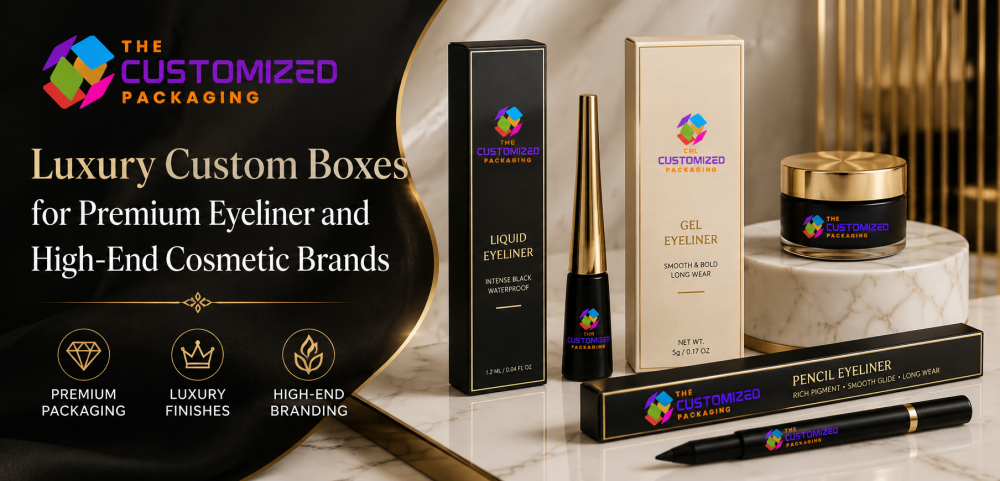
Brands considering a presentation-led structure can explore premium eyeliner packaging in more detail rather than treating every eyeliner carton as a luxury box.
Use Inserts Only When the Product Needs Them
A properly sized eyeliner carton may not need an insert.
Inserts become useful when the package must control several components or hold a heavier container in a specific position.
Possible applications include:
-
Liquid eyeliner bottle
-
Gel pot
-
Applicator brush
-
Sharpener
-
Several eyeliner shades
-
Eyeliner-and-mascara set
-
Cosmetic gift set
Common structural components include:
-
Paperboard channels
-
End stops
-
Bottle collars
-
Jar platforms
-
Dividers
-
Folded trays
-
Accessory compartments
The purpose of an insert should be clear: alignment, organization, movement control or presentation.
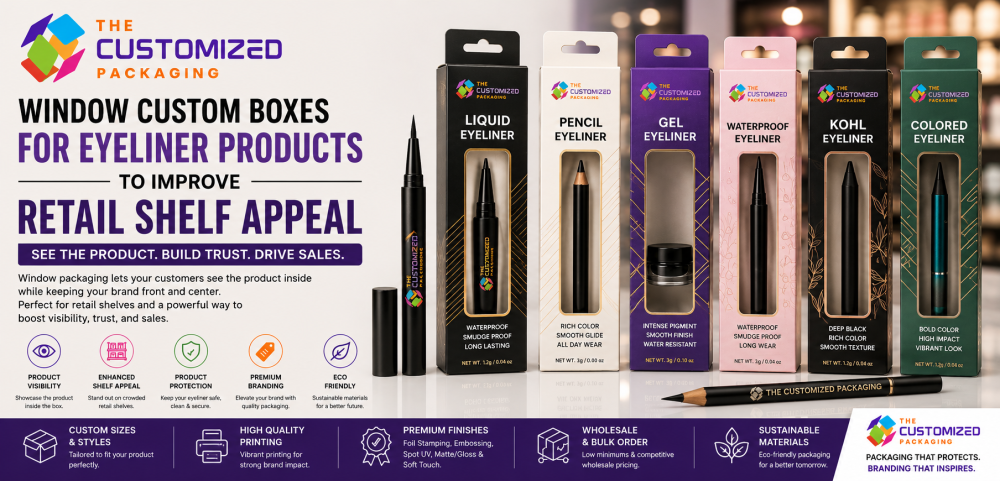
Decide Whether a Window Helps Product Selection
A window is useful when customers benefit from seeing the actual eyeliner container before purchase.
It may reveal:
-
Barrel design
-
Shade indicator
-
Container shape
-
Gel pot
-
Applicator format
-
Part of a colored eyeliner collection
But window size alone does not determine usefulness.
The window must align with the product after it has been packed. A large opening showing mostly empty space can be less useful than a smaller opening positioned over the relevant feature.
Brands relying heavily on product visibility should plan window eyeliner packaging around product sightlines, window placement and retail constraints.
Make Shade Identification Easy
Shade selection is especially important when several eyeliner products use identical cartons.
Brands can differentiate variants through:
-
Shade names
-
Printed color bands
-
End-panel colors
-
SKU numbers
-
Style codes
-
Labels
-
Windows
-
Variable artwork
Shade information should remain visible when packages are displayed together.
A carton should not rely on packaging color alone as an exact representation of the cosmetic formula unless the brand has approved the relevant color standard.
Select Materials According to Structure
Folding Paperboard
SBS and similar folding boards are suitable for many standard eyeliner cartons.
They provide:
-
Smooth printable surfaces
Clean die cutting
Compact structures
Compatibility with windows
Compatibility with common finishing processes
Kraft Paperboard
Natural or white kraft can support particular visual directions.
Kraft appearance alone should not be treated as proof that a package is more environmentally sustainable. Environmental claims should reflect the actual material composition, sourcing, coatings and recovery options.
Rigid Board
Rigid board is more suitable for presentation packaging and larger kits where structure contributes to the opening experience.
Corrugated or Micro-Flute Board
These materials are more useful for larger sets or shipping applications requiring additional stiffness.
A standard single eyeliner pencil generally does not require corrugated retail packaging.
Design the Package Around the Sales Channel
Retail
Retail packaging needs to make product identification easy.
Useful front- or side-panel information can include:
-
Brand
-
Product name
-
Eyeliner format
-
Shade
-
Product identifier
-
Barcode area
-
Window where relevant
-
Hang-tab area where required
Customers often compare several similar eyeliners side by side, so the packaging hierarchy should help them distinguish between variants quickly.
Ecommerce
The retail carton should not automatically be expected to function as the parcel shipper.
For ecommerce orders, a suitable outer shipping package can help protect:
-
Folding cartons from crushing
-
Windows from damage
-
Gel pots or bottles from movement
-
Premium surfaces from scuffing
-
Multiproduct sets from shifting
This creates a simple distinction:
Retail carton → identification and presentation
Outer mailer → transport protection
Salon or Professional Use
Professional eyeliner packaging often benefits from fast product identification and compact storage.
Shade, format and SKU information should remain easy to read when several items are stored together.
Gift and Launch Collections
Multiproduct collections can use additional structure where the presentation is part of the intended experience.
Build a Clear Information Hierarchy
Eyeliner packaging has limited space, especially on slim cartons.
The most important information should receive the most visible positions.
Primary Display Area
Prioritize:
-
Brand or logo
-
Product identity
-
Eyeliner format
-
Shade or collection name
-
Essential supported differentiator
Secondary Panels
These areas can accommodate information such as:
-
Ingredients
-
Directions
-
Responsible company information
-
Barcode
-
QR code
-
Applicable warnings
-
Additional product details
For cosmetics sold to consumers in the United States, packaging space should be planned around applicable cosmetic labeling requirements rather than treating regulatory information as an afterthought.
Allow Space for U.S. Cosmetic Labeling
Cosmetic labeling in the United States can require information on both the principal display panel and information panels.
The responsible cosmetic company should determine the exact legal content required for its finished product, but package design may need space for items such as:
-
Product identity
-
Net quantity
-
Ingredient declaration
-
Company information
-
Directions where appropriate
-
Required warnings or cautions
Slim eyeliner cartons make this especially important because available panel area can be limited.
Product claims such as waterproof, smudge-resistant, long-wear, vegan or ophthalmologist-tested should only be printed when the responsible brand has appropriate support for them.
Use Printing to Organize Information
Printing should make the package easier to understand.
A useful hierarchy is:
-
Brand
-
Product
-
Eyeliner format
-
Shade
-
Essential differentiator
-
Secondary product information
Color coding can distinguish shade families or product types, while typography can establish hierarchy.
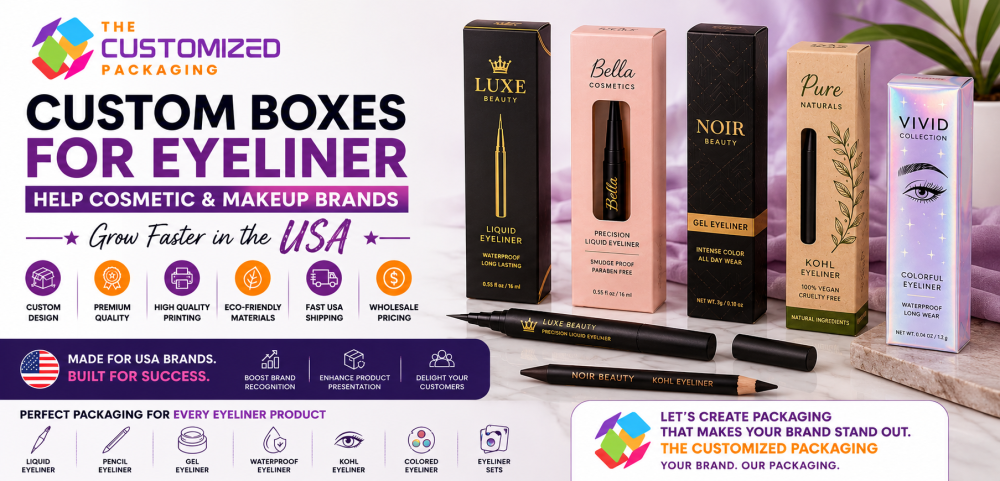
Brands needing deeper guidance on artwork hierarchy, logo placement and maintaining visual consistency across multiple SKUs should use the dedicated printed eyeliner packaging resource.
Use Finishes Selectively
Common finishing options include:
-
Matte coating
-
Gloss coating
-
Soft-touch treatment
-
Foil stamping
-
Spot UV
-
Embossing
-
Debossing
-
Interior printing
Each finish should have a reason.
For example:
-
Foil can emphasize a logo
-
Spot UV can highlight a product name
-
Embossing can add tactile emphasis
-
Matte can reduce surface reflectivity
-
Gloss can increase surface shine
Avoid putting highly reflective or textured effects across barcodes, QR codes or small required copy.
Match Packaging Investment to the Eyeliner
| Product position | Packaging direction |
|---|---|
| Entry-level pencil | Slim folding carton |
| Everyday branded liner | Printed fitted carton |
| Colored eyeliner range | Consistent carton system with shade coding |
| Liquid or gel product | Fitted carton with support where necessary |
| Professional eyeliner | Compact structure with clear identification |
| Multiproduct set | Divided sleeve, drawer or presentation box |
| Premium launch | Presentation structure with selective finishes |
A rigid package is not automatically better than a folding carton.
Accurate dimensions, clear information and appropriate structure can be more important than adding premium components.
Compare Eyeliner Packaging Quotes Correctly
Two packaging prices are only comparable when the specifications are substantially the same.
Compare:
-
Box dimensions
-
Material
-
Board specification
Structure
Printing method
Print coverage
Window
Insert
Finishes
Quantity
Number of artwork versions
Packing format
Delivery destination
Changing any of these variables can change the final price.
Brands planning larger runs can use the wholesale eyeliner box ordering resource for deeper guidance on quote comparison, quantities and procurement.
You can also estimate custom packaging cost once the approximate size, structure, material and quantity are known.
Test the Filled Package Before Production
A dieline proves where the carton will cut and fold. It does not prove that the finished eyeliner fits correctly.
Use the actual production product—or the closest representative sample—when testing the package.
Eyeliner Packaging Sample Checklist
Check:
-
Internal dimensions
-
Cap clearance
-
Product movement
-
Ease of insertion
-
Ease of removal
-
Insert alignment
-
Window alignment
-
Closure performance
-
Hang-tab strength
-
Shade identification
-
Barcode placement
-
QR-code readability
-
Finish alignment
-
Retail orientation
-
Ecommerce protection where relevant
The package should be reviewed as a filled system, not only as an empty printed carton.
Eyeliner Packaging Buyer Checklist
Before requesting final pricing, prepare:
-
Eyeliner format
-
Finished product dimensions
-
Filled product weight
-
Quantity
-
Preferred structure
-
Insert requirement
-
Window requirement
-
Number of shades or artwork versions
-
Printing requirements
-
Finish requirements
-
Retail or ecommerce use
-
Delivery location
-
Required deadline
A complete specification produces a more useful structural recommendation and more comparable quotations.
Frequently Asked Questions
What type of packaging is best for eyeliner?
The best packaging depends on the eyeliner format. Slim folding cartons work well for many pencils and pens, while liquid bottles, gel pots, multiproduct sets and premium collections may require added support, inserts or different structures.
How do you measure an eyeliner box?
Measure the finished closed product at its maximum length, width, depth or diameter. Include the cap, clip, lid, twist mechanism and any projecting features before establishing the internal carton dimensions.
Do eyeliner boxes need inserts?
Not always. A fitted carton can often hold a single pencil or pen without an insert. Inserts are more useful when the product contains a jar, bottle, accessories or several components that need controlled positioning.
Should eyeliner packaging have a window?
A window is useful when seeing the actual product helps customers identify the shade, container or applicator. The opening should align with the packed product and should not interfere with important structural areas.
What material is used for eyeliner packaging?
Folding paperboard is common for standard retail cartons. Kraft paperboard can support selected visual styles, rigid board can be used for presentation packaging, and corrugated materials are more appropriate for larger sets or shipping protection.
What should be printed on eyeliner packaging?
The package may need product identity, shade information, net quantity, ingredients, company information, directions, warnings and other applicable details. The responsible cosmetic company should confirm the legal labeling requirements and substantiate any performance or marketing claims.
How much does custom eyeliner packaging cost?
Cost depends on the package dimensions, material, structure, printing, windows, inserts, finishes, artwork versions, quantity and delivery requirements. Quotes should be compared using the same specification.
Choose Eyeliner Packaging Around the Product
Good eyeliner packaging starts with the finished container.
Measure the actual product, confirm cap and applicator clearance, select a structure suited to the eyeliner format and sales channel, then add windows, inserts, printing and finishes only where they solve a specific functional or presentation requirement.
The Customized Packaging can manufacture eyeliner packaging around your product dimensions, structure, artwork, insert requirements and order quantity. Share the finished product size and project requirements to receive a structural recommendation and custom quotation.