
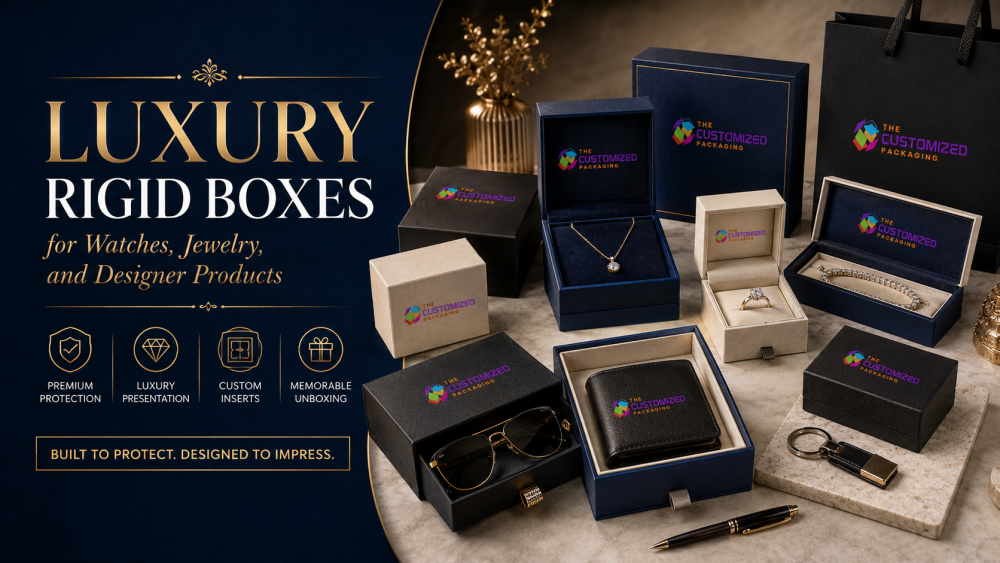
Luxury Rigid Boxes for Watches, Jewelry, and Designer Products
Compare rigid-box structures, inserts and finishes for watches, jewelry and designer accessories, with practical guidance on fit, protection and presentation.
 Published June 01, 2026
Updated August 05, 2026
11 min read
A luxury box should do more than look expensive. It should hold the product in the right position, make important accessories easy to find and create an opening experience appropriate to what is being sold.
A watch needs support around its face and strap. A necklace requires control that prevents the chain from tangling. Designer sunglasses need clearance around the lenses and arms, while a wallet or belt requires a different box depth and internal layout.
Luxury rigid boxes can be developed around these differences. Their firm setup construction provides a stable base for inserts, wrapped surfaces, attached lids and controlled product reveals. The structure can then be adapted to the dimensions, weight and presentation needs of each luxury item.
The most effective result comes from designing the interior first and selecting decorative finishes afterward.
What Makes a Rigid Box Suitable for Luxury Products?
Rigid boxes are commonly made from thick board that is formed into a permanent structure and covered with printed paper, textured stock, fabric or another decorative wrap.
Unlike folding cartons, most traditional rigid boxes do not collapse flat during normal use. This gives them firm walls, defined corners and a more substantial feel in the customer’s hands.
A complete rigid packaging system may include:
| Component | Packaging purpose |
|---|---|
| Rigid board structure | Creates firm walls and a stable presentation |
| Decorative outer wrap | Carries color, texture and branding |
| Closure | Controls how the box opens and remains shut |
| Product insert | Holds the product in a planned position |
| Interior lining | Refines appearance and protects selected surfaces |
| Document compartment | Holds care cards, certificates or instructions |
| Shipping carton | Protects the presentation box during delivery |
The presentation box should not automatically be used as the courier shipping container. Luxury surfaces, wrapped corners and foil details usually need a separate protective shipping layer.
Begin with the Product, Not the Box Style
Choosing a magnetic box because it looks luxurious is not enough. The product’s shape, weight, accessories and display position should determine the structure.
Before selecting a box, record:
-
Maximum product dimensions
-
Packed product weight
-
Preferred presentation angle
-
Delicate or polished surfaces
-
Accessories included with the product
-
Required documents or certificates
-
How the customer should remove the item
-
Whether the box will be retained for storage
The product should be tested inside a physical structural sample. A digital mockup cannot confirm whether a watch cushion is too tight, a necklace chain moves during transit or a sunglass frame touches the lid.
Rigid Watch Boxes Need More Than a Cushion
A watch should remain centered and easy to view without placing unnecessary tension on the strap.
Rigid watch boxes may use a removable cushion, curved platform or shaped insert. The correct option depends on the case diameter, strap length, buckle, bracelet construction and intended presentation.
A complete watch package may also need space for:
-
Warranty or authenticity card
-
Instruction booklet
-
Spare links
-
Additional strap
-
Adjustment tool
-
Charging cable for a smartwatch
-
Cleaning cloth
These components should not rest loosely against the watch face or polished surfaces. A divided tray or document pocket can keep accessories organized without making the box unnecessarily large.
For collections containing several case sizes, one exterior box may work with different internal supports. Each insert must still be tested to ensure the watch remains stable.
Jewelry Boxes Must Control Small, Delicate Pieces
Jewelry packaging presents a different challenge because the product may be lightweight, flexible and easily displaced.
A ring needs a narrow slot that holds the band without hiding the setting. Earrings may require a card or paired openings. Necklaces need hooks, channels or covered compartments that reduce tangling, while bracelets and bangles often work better around cushions or curved supports.
| Jewelry type | Useful insert direction |
|---|---|
| Ring | Padded slot, slit insert or raised presentation platform |
| Earrings | Jewelry card, paired holes or recessed pad |
| Necklace | Upper hooks with a lower chain pocket |
| Pendant | Display card with a concealed chain compartment |
| Bracelet | Cushion, curved channel or elastic support |
| Bangle | Cylindrical cushion or shaped recess |
| Jewelry set | Divided insert with defined positions for each piece |
The insert should display the jewelry without placing excessive pressure on clasps, stones or polished finishes.
Very dark velvet-style interiors can create strong contrast for light metals, while cream, gray or muted colors may better support darker products. The interior color should be tested with the actual jewelry under realistic store and photography lighting.
Designer Products Require Product-Specific Layouts
The phrase designer product packaging covers items with very different dimensions and handling requirements.
Sunglasses need space around the lenses, bridge and arms. A wallet should sit flat without becoming difficult to remove. Belts may be coiled around a platform or folded into a divided tray. Small leather accessories may require tissue or a soft protective pouch before entering the box.
A designer product box may also need to accommodate:
-
Dust bag
-
Care booklet
-
Authenticity card
-
Replacement components
-
Branded tissue
-
Product story card
-
Gift message
The box should not be enlarged simply to create a dramatic reveal. Excessive empty space increases board use, storage volume and shipping dimensions while allowing the contents to move.
Select a Structure That Matches the Reveal
Different rigid structures create different opening experiences.
Magnetic Closure Rigid Boxes
A hinged magnetic box keeps the lid attached and can display interior branding when open. It suits watch collections, jewelry sets, designer wallets and selected gift products.
The magnets, lid alignment and hinge movement should be tested after the insert and product have been loaded.
Two-Piece Rigid Boxes
A lift-off lid and separate base create a traditional presentation associated with jewelry, watches and gifts. Lid depth controls how quickly the product is revealed.
A full-telescope lid covers most of the base, while a shallow lid creates a faster opening.
Rigid Sleeve-and-Tray Boxes
A sliding tray introduces the product gradually. It can be opened with a thumb notch or ribbon pull and works well for bracelets, watches, accessories and limited-edition collections.
The tray clearance should be tested carefully. A sleeve that is too tight becomes frustrating, while a loose tray can slide unexpectedly.
Shoulder-and-Neck Boxes
These boxes include an inner raised section between the lid and base. The visible shoulder creates a layered presentation and can introduce a contrasting color.
They are particularly useful for formal jewelry collections, watches and designer gift products where the exterior structure is part of the luxury experience.
The Insert Determines Whether the Box Feels Custom
A generic cavity inside an attractive box can make the product look misplaced. A fitted insert makes the structure feel developed for the item.
Available insert directions may include rigid paperboard platforms, foam, EVA, molded pulp, fabric-covered supports, cushions, jewelry cards and divided trays.
The choice should consider:
-
Product weight
Required grip
Surface sensitivity
Number of components
Ease of removal
Interior appearance
Shipping movement
Material-separation requirements
Foam can provide precise cavities but should not be selected automatically. Paperboard platforms and folded supports may be sufficient for lightweight products and can create a cleaner material system.
A finger notch, ribbon tab or open edge can help customers remove the product without pulling on a strap, chain or delicate accessory.
Use Luxury Finishes with Restraint
A premium appearance does not require foil, embossing, spot UV and soft-touch lamination on every surface.
Finishes should create hierarchy. A restrained foil logo may be more effective than a fully metallic design. Debossing can introduce texture without adding another color, while a printed interior can reveal a message only after opening.
Common options include:
-
Foil stamping
-
Embossing
-
Debossing
-
Matte lamination
-
Gloss lamination
-
Soft-touch coating
-
Spot UV
-
Textured and specialty papers
-
Fabric or linen-style wraps
-
Interior printing
The finish must also withstand normal storage and handling. Very dark matte surfaces can show dust, fingerprints and rubbing. Metallic wraps and delicate coatings may require additional protection during packing and delivery.
A physical material and print sample is more reliable than selecting finishes from a screen.
Plan Branding Across the Complete Collection
Luxury rigid boxes with logo should create consistency without forcing every product into the same dimensions.
A brand can maintain a recognizable packaging family through:
-
Consistent logo placement
-
Shared exterior colors
-
Repeated interior colors
-
One typography system
-
Matching foil or debossing
-
Similar lid proportions
-
Coordinated information cards
Different structures can still belong to the same brand. A ring box, necklace box and watch case may use different dimensions and inserts while sharing the same wrap, logo treatment and interior design language.
This approach gives each product an appropriate package without making the collection look disconnected.
Include Documents Without Disturbing the Product
High-value products often include information that should remain inside the package.
Authenticity certificates, warranties, care instructions and product stories can be held inside a lid pocket, paper envelope, lower compartment or recessed section of the insert.
Documents should not lie directly over jewelry or a watch face where they can move, scratch surfaces or weaken the initial presentation.
The document size should be confirmed before finalizing the box. Adding a thick booklet after the structure has been approved can prevent the lid from closing correctly.
Separate Presentation Packaging from Shipping Protection
A rigid box protects against normal handling and pressure, but it may still be damaged by courier systems.
For ecommerce orders, the presentation box should normally sit inside a corrugated shipping carton or mailer with controlled clearance. The outer package protects wrapped corners, decorative papers, magnetic closures and premium finishes.
The complete shipment should be checked for:
-
Movement inside the shipping carton
-
Corner and edge damage
-
Pressure on the rigid lid
-
Movement within the insert
-
Surface rubbing
-
Moisture exposure
-
Shipping-label placement
-
Condition after opening
Testing should use the real product, completed insert, presentation box and intended shipping layer.
Avoid Assuming Every Rigid Box Is Reusable
Rigid packaging is often described as reusable because it is stronger than a lightweight carton. Reuse, however, depends on whether the structure has a practical purpose after purchase.
A fitted watch box may continue to protect the product between uses. A jewelry box can support long-term storage when the insert remains functional. An oversized designer box with no useful interior arrangement may simply take up space.
Brands seeking a longer useful life should design for storage from the beginning. This may include durable hinges, removable accessory trays, document compartments and inserts that support repeated product removal.
Reuse should be treated as a design outcome rather than a generic marketing claim.
Prepare the Project Before Requesting Pricing
The cost of custom luxury rigid boxes depends on dimensions, board thickness, structure, wrap, insert, closure, printing, finishes, assembly, quantity and delivery requirements.
Prepare:
-
Product type and dimensions
-
Packed weight
-
Product presentation position
-
Accessories and documents
-
Preferred box structure
-
Insert requirements
-
Exterior and interior colors
-
Logo and artwork
-
Finishing preferences
-
Order quantity
-
Delivery destination
-
Required date
Most custom rigid-box projects begin at 100 units. Brands ordering several products should provide the quantity required for each size and artwork version.
Why Choose The Customized Packaging?
The Customized Packaging develops premium rigid packaging for watch companies, jewelers, fashion labels, boutiques, ecommerce brands and designer-product collections.
Available structures include magnetic closure boxes, two-piece rigid boxes, sleeve-and-tray boxes, shoulder-and-neck boxes and collapsible rigid packaging. Projects can include fitted watch supports, jewelry inserts, accessory compartments, document pockets, exterior and interior printing, foil, embossing and specialty wraps.
Every structure can be planned around the actual product, desired presentation and delivery method. Standard production generally takes 8–12 business days after final structural and artwork approval, with rush production available for eligible projects.
Frequently Asked Questions
Which rigid box is best for a luxury watch?
Magnetic closure, hinged and two-piece rigid boxes can all work for watches. The best choice depends on the watch dimensions, accessories, preferred opening experience and storage purpose.
Can one rigid box be used for different jewelry items?
The same exterior structure may support several products through interchangeable inserts. Each insert should be tested with the actual ring, earrings, necklace, bracelet or watch.
Do luxury rigid boxes need a separate shipping carton?
Usually, yes. An outer corrugated package helps protect the presentation box from shipping labels, abrasion, moisture, corner damage and courier handling.
Which insert is best for jewelry?
The correct insert depends on the jewelry type. Rings need secure slots, necklaces need chain control, earrings need paired holders and bracelets may require curved cushions or fitted channels.
What details are needed for an accurate quotation?
Provide the product dimensions, weight, box structure, insert layout, materials, printing, finishes, quantity, destination and required delivery date.
Make the Interior as Intentional as the Exterior
The outer surface may attract attention, but the interior determines whether the packaging truly feels developed for the product.
A watch should remain centered. Jewelry should stay untangled and easy to remove. Designer accessories should be organized with their documents and supporting components. The box style, insert, wrap and finish should work as one system rather than a collection of unrelated premium features.
When the structure is designed from the product outward, luxury rigid boxes can create a refined presentation while providing the fit, organization and protection expected from high-value packaging.


