
How to Choose Custom Bakery Packaging Boxes for Freshness, Display, and Delivery
Explore practical bakery packaging ideas for cakes, cupcakes, cookies, pastries, bread and gift assortments. See how windows, inserts, box structures and branded details can improve product presentation while supporting the way each item is packed and delivered.
 Published May 18, 2026
Updated August 19, 2026
11 min read
The best bakery packaging ideas begin with what is going inside the box.
A tall decorated cake needs different clearance and support than a dozen cookies. Cupcakes need individual positioning around the base, while delicate pastries may need enough separation to keep toppings and surfaces from touching.
That means creative custom bakery packaging should combine presentation with practical product fit.
Instead of adding decorative features to a generic box, choose the structure, window, insert and printed details around the baked product and the way customers will receive it.
Here are ten practical ideas for creating bakery packaging that looks distinctive without losing sight of product protection and usability.
1. Use Windows for Products Customers Want to See
Bakery products are naturally visual.
Decorated cookies, macarons, donuts, cupcakes and colorful pastries can benefit from bakery boxes with windows because customers can see the product arrangement without opening the box.
The window should be designed around what you want customers to notice.
For example:
- A cupcake window should reveal the frosting
- A cookie-box window should show complete decorated cookies
- A macaron window should show the color arrangement
- A pastry window should reveal toppings without exposing large empty areas
- A cake-box window should avoid interfering with structural corners or closures
A smaller, well-positioned window can often look better than opening most of the top panel.
If window film, adhesives or other components may be used near food, make sure the selected materials are appropriate for the intended product and packaging conditions.
2. Give Cupcakes Their Own Fitted Positions
Cupcakes can look perfect when they leave the decorating table and completely different after a short drive if they are free to move inside the box.
Cupcake boxes with inserts can hold each cupcake around the lower wrapper while leaving space above for frosting and decorations.
Before creating the insert, measure:
- Wrapper diameter
- Finished cupcake width
- Frosting height
- Decorative topper height
- Quantity per box
A six-cupcake box does not simply need six holes.
The spacing between cavities also matters. Cupcakes placed too close together can allow frosting or decorations to touch.
For bakery counters that sell several quantities, consider a family of boxes for single, four-, six- or twelve-piece orders while keeping the same branding system.
3. Use Low-Profile Boxes for Cookies and Brownies
Cookies and brownies usually do not need the internal height required by cupcakes or decorated cakes.
A shallower cookie packaging box can make the assortment look more intentional while reducing unnecessary empty space.
Useful structures can include:
- Window cartons
- Sleeve-and-tray boxes
- Shallow tuck boxes
- Divided assortment boxes
- Two-piece presentation boxes
Arrange the products before deciding the box dimensions.
For example, six large cookies arranged in two rows may create a better presentation than placing the same cookies loosely inside a much larger carton.
Dividers can also help separate flavors or keep decorated surfaces from rubbing against one another.
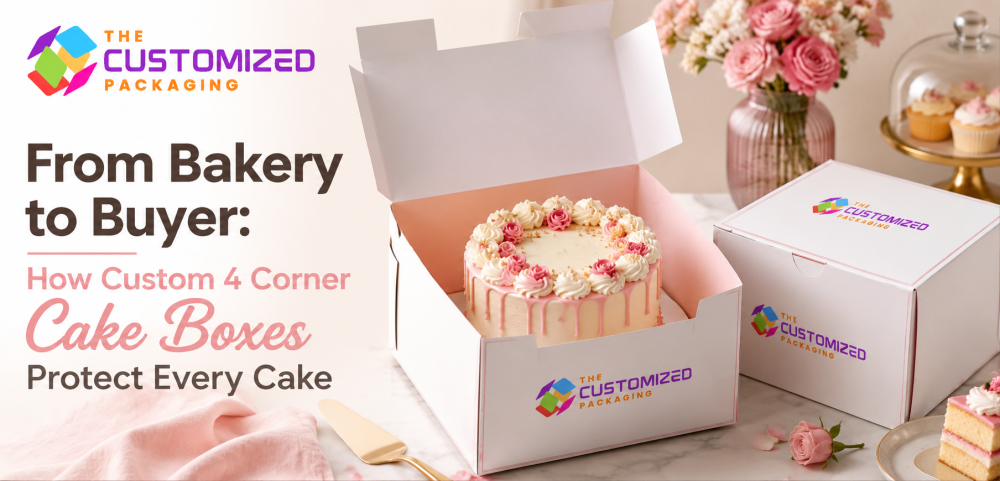
4. Build Cake Boxes Around the Finished Decoration
Cake packaging should be measured after the cake is completely decorated and placed on its board.
The nominal cake diameter is only one measurement.
Cake packaging boxes should also account for:
- Cake-board width
- Finished cake height
- Piped sides
- Flowers
- Chocolate pieces
- Toppers
- Side decorations
- Space needed to load and remove the cake
A box that fits an undecorated eight-inch cake may not fit the finished product.
The base is equally important. Heavier cakes need a stable platform and packaging structure suited to the finished packed weight.
For tall or heavily decorated cakes, front-loading or easy-access structures can make loading easier because the bakery does not have to lower the entire finished cake through a narrow top opening.
5. Use Sleeve-and-Tray Packaging for Delicate Assortments
A sleeve-and-tray format can create a controlled reveal for macarons, chocolates, petit fours, cookies and premium pastry assortments.
Instead of opening a conventional lid, the customer slides the tray from the outer sleeve.
This structure works particularly well when the products are arranged neatly inside fitted sections.
For example:
Six macarons → individual cavities → sliding tray → branded sleeve
The tray controls presentation while the sleeve provides a large printable surface.
For fragile items, the internal layout should keep neighboring products from colliding while still allowing customers to remove each piece comfortably.
This type of pastry box can work well for gifting and limited collections when the product value supports the additional structure.
6. Let Bread Packaging Match the Bakery Style
Bread packaging does not always need the same fully enclosed presentation used for decorated desserts.
Artisan loaves, baguettes and specialty breads may use sleeves, cartons or outer boxes together with an appropriate inner wrap or bag where the product requires one.
Natural kraft can provide a warm, understated appearance for bakeries that prefer a handcrafted visual identity.
However, kraft appearance and environmental performance are not the same thing.
If sustainability is part of the brand message, use specific information about the material or packaging configuration rather than relying on appearance alone.
For example, a bakery can communicate a documented recycled-content specification or reduced-material design when applicable instead of making a broad environmental claim.
7. Turn Mixed Bakery Orders Into Organized Gift Boxes
Some bakery purchases are not single products.
Holiday assortments, corporate gifts, thank-you boxes and celebration packages may contain several different baked items.
A mixed gift box can use:
- Dividers
- Separate trays
- Paperboard compartments
- Product cards
- Branded tissue
- Sleeves
- Ribbons where appropriate
The internal arrangement should prevent taller or heavier items from pressing against delicate products.
For example:
Cookies + brownies + macarons
may work better in three defined sections than in one open cavity.
This also gives the customer a clearer opening sequence.
The box can immediately show what is included rather than presenting a pile of individually wrapped items.
8. Build One Packaging Family Across the Bakery Menu
A bakery may need several box structures while still looking like one brand.
Cakes, cookies, cupcakes and pastries do not need identical packages.
Instead, keep certain visual elements consistent across your branded bakery boxes.
These may include:
- Logo position
- Main brand colors
- Typography
- Illustration style
- Pattern
- Product-label format
- QR-code position
- Interior message
Then allow the structure to change according to the product.
For example:
Cupcakes → window carton with insert
Cookies → shallow sleeve-and-tray box
Cake → taller reinforced carton
Pastries → window box
The boxes perform different functions, but the visual system makes them recognizable as part of the same bakery.
9. Use Printing for Useful Information, Not Just Decoration
Good bakery packaging design should make the package easier to understand as well as more recognizable.
Useful printed information may include:
- Product name
- Flavor or assortment
- Bakery contact information
- Website
- Social media handle
- QR code
- Storage guidance
- Serving guidance
- Reheating instructions
- Allergen or other product information provided by the bakery
The exact information required will depend on the product and how it is sold.
Plan the information before finalizing the artwork.
A QR code should not sit across a fold or window edge. Important text should remain readable after the carton is assembled.
If several products use the same structural box, labels or designated variable-information areas can make it easier to identify different flavors or assortments without redesigning the entire package.
10. Design the Box Around How the Order Travels
A box that works well for bakery-counter pickup may not be the right package for local delivery or parcel shipping.
Counter and Pickup
Packaging should be quick for bakery staff to assemble and easy for customers to carry.
Products should stay stable during normal hand carrying without requiring complicated packing steps.
Local Delivery
Vehicle movement introduces braking, turns, vibration and stacking.
Cupcake inserts, stable cake boards and appropriate dividers can become more important when products are being delivered rather than carried a short distance from the counter.
Ecommerce Shipping
Shelf-stable products such as packaged cookies, biscotti or brownies may require several packaging layers.
A typical system may be:
Product or inner wrap → Branded bakery box → Protective shipping carton
The decorative bakery carton should not automatically be treated as parcel-shipping protection.
If ecommerce is part of the business model, test the entire packed system rather than only the retail box.
Which Bakery Packaging Idea Fits Your Product?
Use the baked product as the starting point.
| Bakery Product | Useful Packaging Direction | Main Design Priority |
|---|---|---|
| Decorated cake | Reinforced cake carton | Height and stable base |
| Cupcakes | Box with fitted insert | Frosting clearance and movement control |
| Cookies | Shallow window or tray box | Arrangement and breakage reduction |
| Brownies | Compact divided carton | Portion organization |
| Macarons | Fitted tray with sleeve | Individual positioning |
| Donuts | Shallow window carton | Topping clearance |
| Pastries | Window box or tray-and-sleeve | Surface protection |
| Artisan bread | Sleeve or carton with suitable inner packaging | Shape and product conditions |
| Mixed bakery gifts | Divided presentation box | Product separation |
| Shippable baked goods | Retail box plus shipping carton | Complete transit protection |
These are starting directions rather than fixed rules.
The final package should be tested with the actual finished product.
Keep the Creative Idea Practical
A packaging feature should solve a problem or improve the presentation.
Before adding another component, ask:
Does it improve product fit?
Does it make the bakery product easier to see?
Does it organize the assortment?
Does it make carrying or delivery easier?
Does it communicate useful information?
If the answer is no, the feature may only add material, assembly and cost.
Good bakery packaging can be visually distinctive without becoming complicated.
Plan Direct Food Contact Carefully
Not every printed bakery carton needs to touch the food directly.
Depending on the product, the complete package may include a liner, wrap, bag, baking cup, tray or cake board between the baked item and the outer box.
Tell your packaging supplier whether the product will contact any packaging component directly and describe the expected conditions, including whether the food is dry, oily, moist, chilled, frozen or packed warm.
Materials, coatings, adhesives, window components and other food-contact elements should be selected for their actual intended use.
For a broader look at bakery box sizing, product fit, windows, inserts, materials, delivery and ordering, see Premium Customized Bakery Boxes for Fresh and Attractive Packaging.
What to Provide When Requesting Custom Bakery Boxes
To develop custom bakery boxes around the actual product, provide:
- Type of baked product
- Finished product dimensions
- Packed weight
- Quantity per box
- Cake board, liner or tray dimensions
- Decoration or frosting height
- Whether the product contacts the packaging directly
- Preferred window or insert
- Printing requirements
- Order quantity
- Pickup, local delivery or shipping use
- Delivery destination
If you do not know the box dimensions, provide the dimensions of the finished product and any supporting tray or board instead of guessing.
Why Choose The Customized Packaging?
The Customized Packaging develops custom bakery packaging around baked-product dimensions, presentation requirements and how the order will be handled.
Available options can include folding cartons, cake boxes, window boxes, sleeve-and-tray structures, gable boxes, corrugated packaging, dividers and fitted paperboard inserts.
Boxes can also be customized with brand colors, logos, product information and compatible finishing options.
The best starting point is the finished bakery product.
Once its dimensions, weight, presentation and delivery method are known, the box can be developed around what the food actually needs rather than forcing it into a generic package.
Frequently Asked Questions
What type of packaging is best for bakery products?
The best structure depends on the baked product. Cakes need stable bases and adequate height, cupcakes benefit from fitted inserts, cookies often work well in shallow cartons, and pastries may benefit from windows or divided trays.
Are window boxes good for bakery products?
Windows can work well when seeing the product improves presentation. The window should be positioned around the baked item while maintaining the required box structure and using components appropriate for the intended packaging conditions.
How should cupcakes be packaged for delivery?
Cupcakes should have enough frosting clearance and can benefit from fitted inserts that hold each cupcake around the base. The complete packed box should be tested under the bakery's normal delivery conditions.
Can one bakery box be used for several products?
Sometimes. Products with similar dimensions and protection requirements may share a box size, but each product should be tested for fit. A universal box should not create excessive empty space or inadequate support.
What information can be printed on bakery boxes?
Bakery boxes can carry brand identity and useful customer information such as product names, storage or serving guidance, contact details, websites and QR codes. The bakery should provide any product-specific or required information that must appear on the package.
Do bakery boxes keep products fresh?
An outer bakery box can help protect products from handling and physical damage, but freshness depends on the food, storage conditions, time, temperature and the complete packaging system. Some products may also require suitable liners, wraps, bags or other barriers.