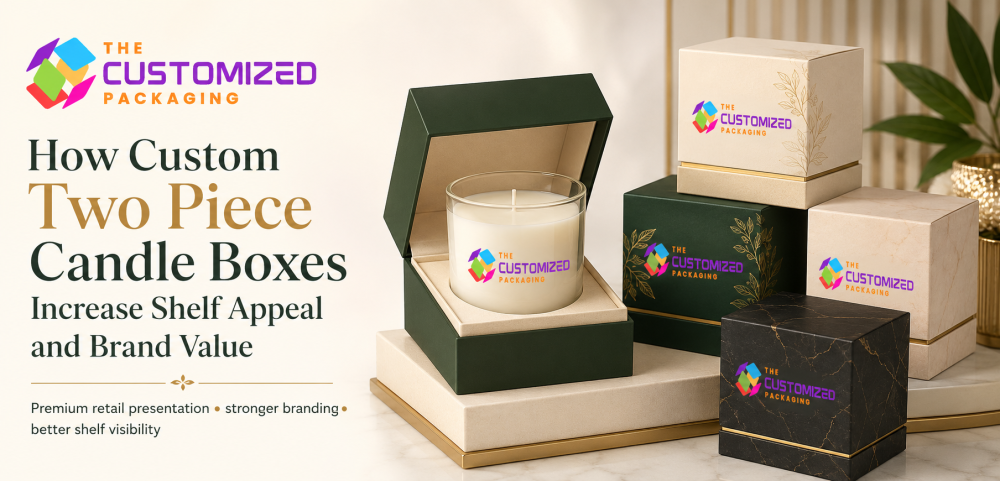
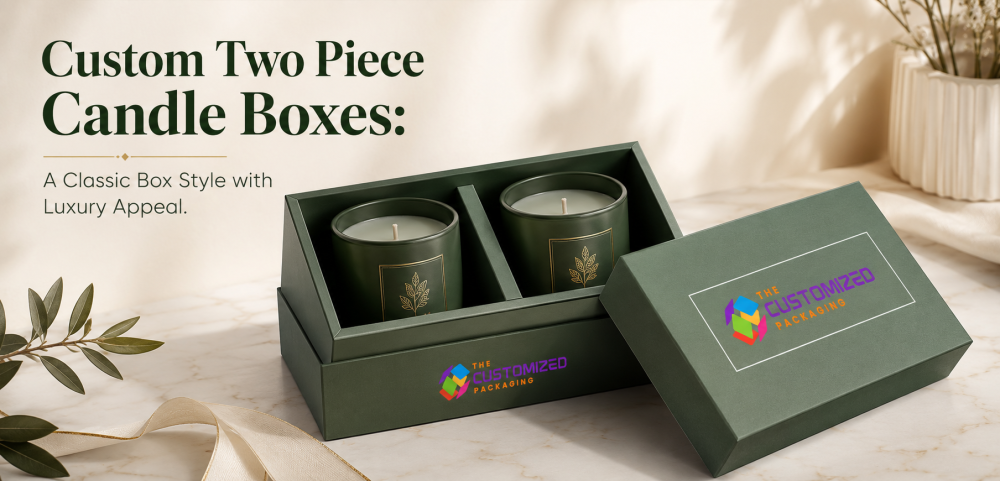
Custom Two Piece Candle Boxes: How Lid Depth Changes Fit and Presentation
A shallow lid and a full-telescope lid can make the same candle box look and open completely differently. Learn how candle height, vessel shape, insert position and lid overlap determine the right two-piece box proportions.
 Published June 15, 2026
Updated September 01, 2026
17 min read
A two-piece candle box may look simple: one base and one removable lid.
But changing the depth of that lid can completely change how the package looks, opens and presents the candle inside.
A shallow lid leaves more of the lower box visible. A deeper lid creates greater overlap. A full-telescope lid can cover most or all of the base, while a shoulder-and-neck design can create a narrow contrasting reveal between the lid and bottom section.
That makes lid depth one of the most important decisions when designing custom two piece candle boxes.
The right proportion depends on the finished candle height, vessel shape, insert position, label visibility and the type of presentation you want when the customer lifts the lid.
Start With the Finished Candle
Before choosing lid depth, measure the actual candle that will go inside the box.
Do not work only from wax weight or advertised jar capacity.
Measure the complete product, including:
-
Glass or ceramic vessel
-
Metal tin
-
Jar lid
-
Raised rim
-
Label
-
Decorative sleeve
-
Protective wrap
-
Dust cover where used
You also need the filled weight.
A lightweight travel tin and a heavy glass candle jar may use the same general two-piece structure, but the proportions and interior support can be very different.
The box should be developed around the finished candle, not an approximate product size.
Understand What Lid Depth Changes
The lid does more than cover the base.
Its depth affects:
-
How much of the base remains visible
-
How quickly the candle is revealed
-
How securely the lid overlaps the base
-
How easily the customer removes it
-
How two colors or materials interact
-
How much exterior branding space is available
-
How tall or compact the finished box appears
This is why two boxes with the same internal candle dimensions can still create very different presentations.
Shallow-Lid Two Piece Candle Boxes
A shallow lid covers only the upper portion of the base.
This leaves a larger section of the bottom box visible while the package is closed.
That can work particularly well when you want the lid and base to create visible contrast.
For example:
cream lid + dark green base
or
black lid + kraft base
The exposed lower section becomes part of the design rather than disappearing underneath the lid.
When a Shallow Lid Works Well
A shallow lid can suit:
-
Small candle tins
-
Lightweight jar candles
-
Wedding favors
-
Seasonal candle collections
-
Boutique retail candles
-
Boxes using contrasting lid and base colors
The lid should still overlap enough of the base to remain properly seated during normal handling.
A lid that is too shallow may feel loose or unstable.
Partial-Telescope Candle Boxes
A partial-telescope lid extends farther down the base while still leaving a visible portion of the bottom section.
This creates a more enclosed appearance than a shallow lid without completely hiding the base.
For many custom two piece candle boxes, this is a useful middle ground.
It provides:
-
Noticeable lid-and-base contrast
-
More overlap
-
Controlled opening
-
Larger printable lid walls
-
Strong visual proportions for medium-height jars
The exact amount of visible base should be decided according to the candle and box proportions rather than using one fixed percentage for every product.
Full-Telescope Two Piece Candle Boxes
A full-telescope lid covers most or all of the lower base wall.
When closed, the package can appear almost like one continuous outer form.
The base becomes more visible only after the lid starts to lift.
This structure can work well for:
-
Tall jar candles
-
Premium rigid candle boxes
-
Collector editions
-
Gift-ready candles
-
Candle sets using more enclosed presentation
A deeper lid also creates more overlapping surface between the two parts.
But deeper does not automatically mean better.
If the fit is too tight, customers may struggle to remove the lid comfortably.
Shoulder-and-Neck Candle Boxes
A shoulder-and-neck structure adds another layer between the lid and base.
An inner neck rises above the lower section, and the lid fits around it.
When closed, the outer lid and base may appear nearly flush while a contrasting neck becomes visible during opening.
This design can work especially well when the candle packaging is intended to create a more structured presentation.
The neck can use:
-
Contrasting color
-
Metallic-effect paper
-
Printed pattern
-
Matching wrap
-
Interior brand color
The candle still needs enough clearance inside the complete structure.
Choose Lid Depth Around the Candle Height
A short candle and a tall candle do not always look balanced inside the same lid proportion.
For example, a very deep lid on a short candle box can make the package feel visually heavy.
A very shallow lid on a tall box may create an unusually exposed base.
A useful starting point is to view the closed box as one set of proportions.
Ask:
-
Does the lid look too small?
-
Does it overpower the base?
-
Does the exposed section feel intentional?
-
Does the box still look balanced beside the actual candle?
The best proportion is usually determined visually after the structural fit is correct.
Base Reveal Is Part of the Design
The visible section of the base is often overlooked.
On a partial-telescope box, that exposed band can become one of the strongest visual elements.
Brands can use it to:
-
Introduce a second color
-
Identify fragrance families
-
Create seasonal variations
-
Separate premium collections
-
Add a subtle pattern
For example, the outer lid may remain cream across the entire candle line while the visible lower base changes between sage, burgundy, navy and amber for different fragrances.
This creates variation without redesigning the complete structure.
Keep Base Reveal Consistent Across a Collection
If several fragrances use the same candle vessel and box size, keeping the same lid depth can create stronger visual consistency.
The artwork or lower-base color can change while the structure remains stable.
That gives customers a recognizable packaging family.
A collection becomes harder to coordinate when every fragrance uses a different:
-
Lid depth
-
Base height
-
Logo position
-
Opening proportion
Unless the product itself changes, structural consistency is usually more useful than unnecessary variation.
Lid Fit Should Feel Controlled, Not Tight
A two-piece box should not require excessive force to open.
The lid needs enough clearance to move over the base smoothly.
Several things can affect that fit:
-
Board thickness
-
Wrapping paper
-
Lamination
-
Lid depth
-
Box dimensions
-
Production tolerance
-
Humidity
-
Interior construction
That means lid fit cannot be judged only from nominal dimensions on a drawing.
A finished sample should be opened and closed repeatedly.
A Deeper Lid Can Create More Friction
As the lid extends farther down the base, more surface area may come into contact during opening.
This can make a full-telescope box feel different from a shallow-lid structure.
If the fit is already tight, increasing lid depth can make the opening more difficult.
Watch for signs such as:
-
Lid sticking
-
Base lifting with the lid
-
Exterior wrap rubbing
-
Customer needing to shake the box
-
One side catching before the other
The package should feel deliberate rather than difficult.
A Lid Can Also Be Too Loose
Too much clearance creates a different problem.
The lid may:
-
Shift sideways
-
Rattle
-
Sit visibly off-center
-
Feel disconnected from the base
For a premium candle package, noticeable lateral movement can make the structure feel less precise.
The correct fit allows easy opening while still keeping the lid visually aligned.
Test Lid Fit After the Final Wrap Is Applied
Rigid two-piece boxes are often wrapped with printed or specialty paper.
That wrap changes the finished dimensions slightly.
Lamination, textured paper and interior lining can also affect the final construction.
Do not approve the lid clearance using only unfinished board components.
The final sample should use the intended:
board + wrap + lining + finish
because those layers influence the opening action.
Insert Height Changes the Lid Relationship
A fitted insert controls where the candle sits vertically inside the base.
If the insert raises the candle, more of the jar may become visible when the lid is removed.
That can improve presentation—but it also reduces top clearance.
The highest loaded point may be:
-
Jar lid
-
Pump or accessory
-
Decorative topper
-
Candle dust cover
-
Product card
Measure from the base of the finished insert to the highest product point.
Then confirm that the lid closes without contact.
Do Not Let the Candle Touch the Inside Lid
A candle jar should not need to press against the upper lid surface just to make the box close.
This is especially important for:
-
Decorative lids
-
Metallic caps
-
Ceramic vessels
-
Raised labels
-
Textured finishes
Contact can create scratching, rubbing or pressure.
The box should provide enough internal clearance for the finished candle.
If the package closes correctly when empty but lifts when the product is loaded, review the insert height before altering the lid.
Jar Diameter Still Matters in a Lid-Depth Article
Although lid depth controls vertical presentation, the base must still hold the candle correctly.
A glass jar that moves sideways can make an otherwise precise lid-and-base package feel poorly designed.
The candle can be stabilized with an appropriate:
-
Paperboard collar
-
Recessed platform
-
Molded support
-
Corrugated insert
-
Selected foam insert
The holder should control movement without making the candle difficult to remove.
Keep the Candle Label Facing Forward
If the vessel has a primary front label, the insert should help maintain its orientation.
This becomes particularly noticeable when the lid is removed.
The customer should ideally see the intended face of the candle immediately.
A circular jar can rotate easily unless the insert or product layout controls orientation.
A physical sample can confirm whether the candle remains centered and correctly facing the opening position.
Glass and Ceramic Candles Need Weight Support
Heavy candle vessels should be supported from a stable lower area.
Do not rely on the side walls of a decorative rigid box alone to manage the product.
The base and insert should work together.
For a heavy glass jar, that may include:
-
Reinforced base platform
-
Molded-pulp support
-
Corrugated support
-
Structured paperboard insert
The two-piece presentation box creates the customer-facing package.
If the candle will be shipped through a parcel network, additional outer shipping protection may still be appropriate.
Metal Candle Tins Allow More Compact Proportions
Metal tins are typically lighter and lower-profile than many glass jars.
That can make them suitable for shallower two-piece packaging.
A compact tin may look oversized if placed inside a very tall rigid structure.
For these products, a lower base with a shallow or partial-telescope lid can create a more proportional presentation.
Always include the rolled rim or screw-top lid when measuring the finished tin.
Pillar Candles Need Height and Surface Clearance
Pillar candles create a different challenge because the wax itself may be exposed.
The box needs enough room to avoid unnecessary rubbing against textured or decorative surfaces.
Depending on the candle, a protective wrap or support may be useful.
The lid depth should be selected only after the complete packed pillar height is known.
A deep lid cannot compensate for an insert that allows the candle to lean against the box wall.
Multi-Candle Sets Need One Consistent Top Line
If several candles are displayed together, differences in vessel height can make the interior look uneven.
An insert can raise shorter products or lower taller ones so the tops create a more deliberate visual arrangement.
This becomes important with a lift-off lid because the entire set may be visible at once.
The packaging should be designed around the complete collection rather than simply dividing the base into equal spaces.
Lid Depth Can Change How Multi-Candle Sets Feel
A shallow lid reveals the complete collection quickly.
A deeper lid creates a more gradual opening because the customer must lift farther before the contents become visible.
Neither approach is universally better.
Choose according to the desired presentation.
For:
quick visual reveal: shallower lid
more enclosed presentation: deeper lid
layered premium reveal: shoulder-and-neck
The product layout still matters more than the theatrical effect.
Branding Should Follow the Lid Proportion
A shallow lid provides less vertical side area for artwork.
A deeper lid creates larger side panels.
That can influence where information such as:
-
Fragrance name
-
Product line
-
Website
-
Brand message
is placed.
The main top panel will usually remain the strongest location for the logo.
Supporting information can move to the lid sides or exposed base depending on the structure.
Do not design the artwork before the final lid depth is established.
Avoid Important Artwork Across the Lid Edge
The transition between the lid and base can visually break artwork.
If a graphic is intended to continue across both sections, small production tolerances can make alignment difficult.
For most custom two piece candle boxes, it is safer to treat the lid and base as coordinated but separate visual surfaces.
A repeating pattern can tolerate small shifts more easily than a single image that must align perfectly across the joint.
Use the Exposed Base for Fragrance Identification
When several candles share one structural box, the exposed base can become a useful fragrance-identification area.
For example:
same lid: core brand identity
changing base color: fragrance family
This allows the collection to stay recognizable while still helping customers distinguish scents.
It can also make product photography more consistent.
The exact fragrance information can remain on the candle label and supporting panels.
Keep Safety and Product Information Separate From Decorative Proportions
Candle packaging may need space for product information and safety communication appropriate to the product and market.
Do not sacrifice readable information simply to create a cleaner visual box.
Reserve appropriate areas before final artwork approval.
Depending on the product, those may include:
-
Candle name
-
Net quantity
-
Business identification
-
Barcode
-
SKU
-
Care instructions
-
Safety warning
-
Website
-
Batch information
The exact obligations should be confirmed for the candle being sold.
Interior Lid Printing Should Add Something Useful
The inside of the lid becomes visible immediately after removal.
It can be used for:
-
Short fragrance description
-
Candle-care guidance
-
Thank-you message
-
QR code
-
Collection story
Keep it concise.
The candle should remain the main focus of the opening.
Interior printing works best when it provides information or atmosphere that does not belong on the cleaner exterior.
Do Not Choose Lid Depth Only for “Luxury”
A full-telescope or shoulder-and-neck box can look refined, but a deeper lid is not automatically more premium.
A shallow lid with excellent proportions, accurate fit and strong material choices can look equally deliberate.
Luxury presentation depends more on:
-
Accurate construction
-
Product fit
-
Clean edges
-
Controlled opening
-
Stable candle placement
-
Appropriate materials
than on the number of millimeters the lid overlaps the base.
Choose lid depth because it works with the candle and desired presentation.
Sample More Than One Lid Depth When the Choice Is Unclear
If the brand is deciding between a shallow and deeper structure, create physical mockups where practical.
Place the actual candle inside both.
Compare:
-
Closed proportions
-
Visible base
-
Opening feel
-
Product reveal
-
Logo placement
-
Ease of removal
Photograph them side by side.
The better choice is often obvious once the real vessel is inside the package.
Test the Box With the Candle Fully Loaded
A useful sample includes more than the empty box.
Add:
-
Finished candle
-
Final lid
-
Insert
-
Dust cover
-
Fragrance card
-
Tissue where used
-
Accessory where used
Then close the package normally.
Check whether anything changes the lid position.
The final product-loaded sample is what the customer will actually experience.
Two Piece Candle Box Lid-Depth Checklist
Before approving custom two piece candle boxes, confirm:
-
Finished candle dimensions are known
-
Filled weight is known
-
Lid style has been selected intentionally
-
Base reveal looks proportional
-
Lid moves smoothly over the base
-
Lid is not excessively loose
-
Final wrap is included in fit testing
-
Insert height is included
-
Tallest product point clears the lid
-
Candle label faces the intended direction
-
Jar remains centered
-
Heavy vessels are supported properly
-
Multi-product sets have balanced heights
-
Exterior artwork fits the final lid proportion
-
Interior printing remains readable
-
Finished sample has been repeatedly opened and closed
-
Shipping protection is planned separately where required
A two-piece box should be approved as a complete candle package, not as an empty lid-and-base sample.
Frequently Asked Questions About Custom Two Piece Candle Boxes
What are custom two piece candle boxes?
They are candle boxes made with a separate removable lid and base. The structure can be produced in different materials and lid depths for glass jars, ceramic vessels, tins, pillar candles and candle gift sets.
What is the difference between a shallow lid and a full-telescope lid?
A shallow lid covers only the upper part of the base, leaving more of the lower box visible. A full-telescope lid extends much farther down and may cover most or all of the base wall.
Which lid depth is best for candle packaging?
There is no universal best depth. The correct choice depends on candle height, vessel proportions, desired base reveal, box construction and preferred opening experience.
Does a deeper lid make a candle box more secure?
A deeper lid creates more overlap, but overall packaging performance also depends on lid clearance, base construction, product support and handling conditions. Deeper does not automatically mean better.
How tight should a two-piece candle box lid be?
The lid should remain aligned and properly seated while still lifting without excessive force. Final fit should be tested after wrapping, lining and other finishing layers are applied.
Can glass jar candles use two-piece boxes?
Yes. Glass jars can use two-piece candle boxes with appropriate base support and inserts. The complete candle, insert and presentation box should be tested together.
Can two-piece candle boxes hold multiple candles?
Yes. The base can be developed with divided inserts or compartments for several candles and accessories. The complete packed weight and product arrangement should guide the structure.
Can the lid and base use different colors?
Yes. Contrasting lid and base colors can create a clear visual reveal, particularly with shallow and partial-telescope structures where part of the lower base remains visible.
Should two-piece candle boxes have inserts?
Not every candle requires the same insert, but fitted supports can help center jars, control movement and organize multi-product sets where needed.
Should the finished candle box be sampled before production?
Yes. A physical sample helps confirm lid fit, base reveal, candle clearance, insert height, opening resistance and the overall proportions before a larger production run.
Choose the Lid Around the Candle
The strength of custom two piece candle boxes comes from a simple structure that can be adjusted in very different ways.
A shallow lid exposes more of the base. A partial-telescope lid creates balanced overlap. A full-telescope lid produces a more enclosed appearance, while a shoulder-and-neck structure can introduce another layer of color and presentation.
The best choice starts with the finished candle.
Measure the vessel. Check its weight. Decide how high it should sit in the insert. Confirm the amount of base you want visible and then test how the finished lid opens over the completed box.
When those proportions work together, the package feels intentional without needing unnecessary complexity.
The Customized Packaging develops custom two piece candle boxes around your finished candle dimensions, vessel weight, preferred lid depth, insert and branding. Share your candle size and packaging requirements to develop a lid-and-base structure with the right fit and presentation.