



| Specification | Available Options |
|---|---|
| Product Type | Secondary cartons for sealed primary packaging |
| Structures | Folding cartons and selected rigid presentation cartons |
| Materials | White paperboard, kraft paperboard, and wrapped rigid board |
| Custom Sizes | Dimensions based on actual primary packs and unit count |
| Closures | Standard carton closures or specified specialized locking systems |
| Child Resistance | No certification claimed without appropriate finished-package evidence |
| Inserts | Paperboard partitions, platforms, and compatible fitted components |
| Pack Configurations | Single-unit and multi-unit secondary cartons |
| Printing | Branding and customer-supplied product information |
| Finishes | Selected matte, gloss, and decorative finishes where suitable |
| Shipping Role | Secondary retail carton; additional shipping packaging where needed |
| Quote Requirements | Primary pack sizes, unit count, closure details, insert, artwork, quantity |
Custom Blunt Packaging Boxes for Secondary Retail Packaging
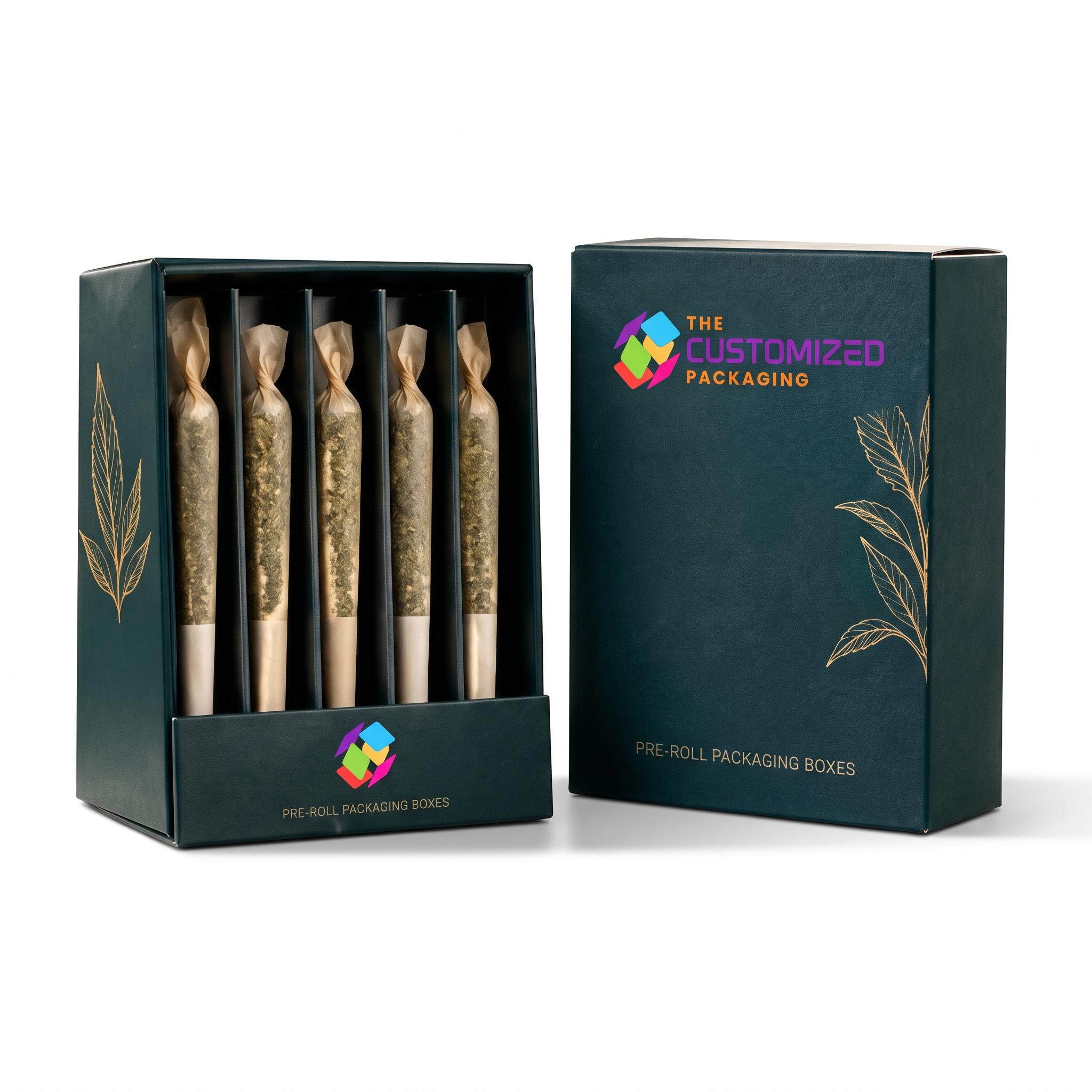
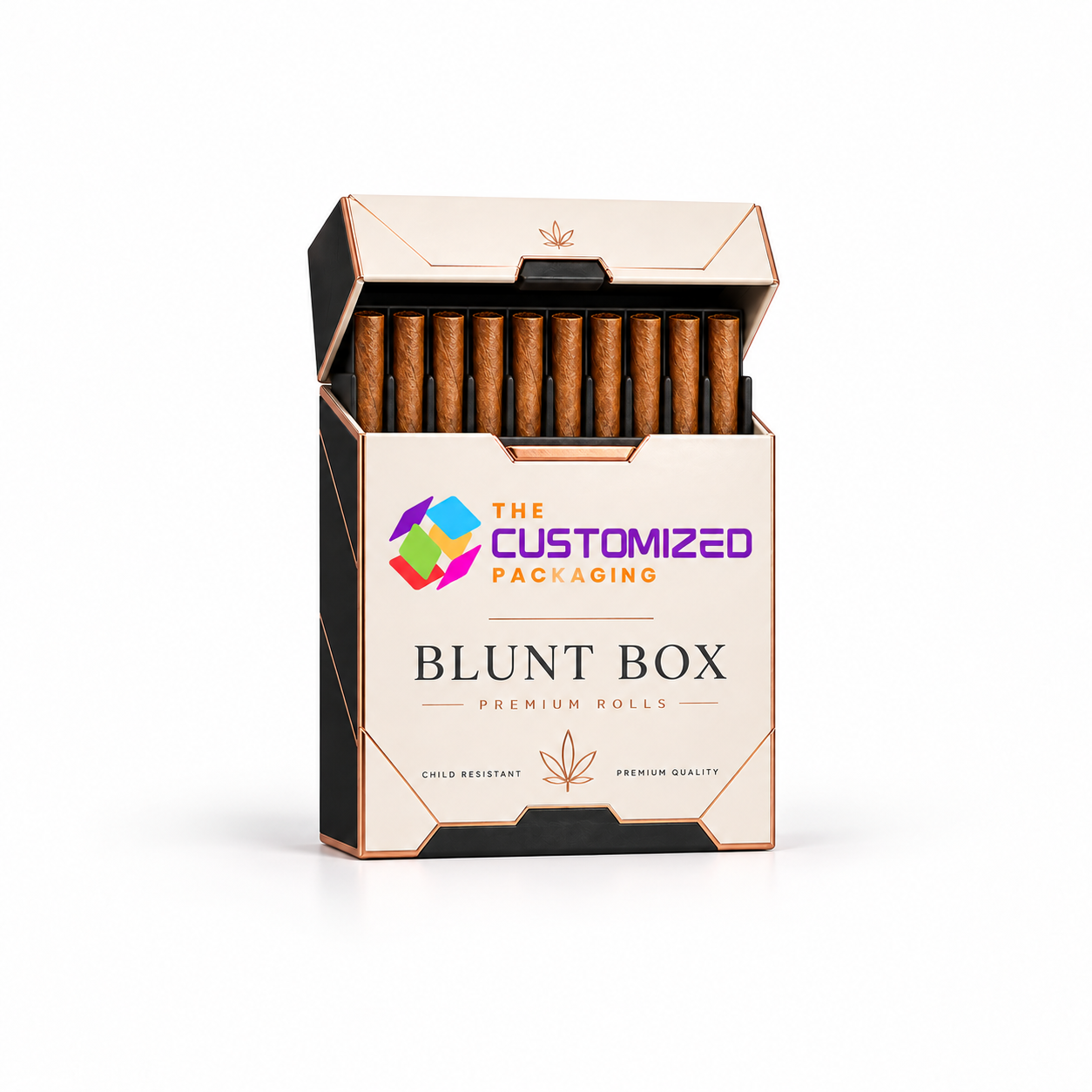
Custom Child Resistant Blunt Packaging Boxes are designed as branded outer cartons for tubes, wraps, and multi-unit packs. The carton provides space for product identification, printed information, and organized presentation while the contents remain in their separately specified primary packaging. Available structures can be developed around a single unit or an assortment, with dimensions based on the actual packed products.
The right outer box starts with product measurements rather than a standard package size. A fitted carton should account for the length and width of the primary pack, closures, labels, and any accessories. Multi-unit configurations may require internal partitions or a platform to keep individual containers aligned.
Related formats include Child Resistant Joint Packaging Boxes for differently sized primary packs and Child Resistant Mylar Bags for flexible packaging configurations. The appropriate structure depends on the product, packaging role, and verified requirements.
Locking Features and Child Resistance Requirements
Specialized carton closures may include locking tabs or multi-action opening mechanisms where a suitable design is available. However, a closure that looks difficult to open is not automatically child resistant. Any child-resistance claim requires evidence applicable to the finished package and its intended market.
For regulated products, packaging requirements can differ by jurisdiction and product category. Brands should confirm their applicable rules and testing obligations before approving artwork or structural specifications. This page does not represent an individual box design as certified, tested, or compliant without supporting documentation.
When requesting a quotation, identify whether the package will be a secondary carton, whether the contents already have approved primary packaging, and whether a specific tested closure system is required.
- Provide the dimensions of each sealed primary container or tube.
- Specify the number of units to be placed in each outer carton.
- Confirm whether a standard or specialized locking closure is needed.
- Share any applicable packaging specifications or documented testing requirements.
- Identify the available space for labels, warnings, and product information.
- Request a sample review before approving the finished construction.
| Packaging Component | Function | Design Consideration |
|---|---|---|
| Secondary Carton | Groups and presents sealed primary packages | Product dimensions and printed panels |
| Internal Insert | Positions individual units | Unit count and cavity spacing |
| Specialized Closure | Controls opening according to its design | Documented testing requirements |
| Outer Shipping Carton | Supports distribution of packaged goods | Weight and transportation conditions |
Carton Structures, Materials, and Product Inserts
Depending on the required format, secondary cartons may use folding paperboard, kraft paperboard, or wrapped rigid board. A lightweight folding carton may suit small prepacked units, while a rigid structure offers a different presentation and additional space for fitted components.
Internal inserts can be designed to organize individual primary packages within the carton. Paperboard partitions, die-cut platforms, and selected foam components are options when compatible with the product and structure. Each cavity should provide suitable loading clearance without applying unnecessary pressure to labels, caps, or sealed packaging.
Printing may be applied to the exterior, interior, or selected panels where the material and construction permit it. The proposed box can also be configured with a solid lid or a specialized opening, subject to the requirements of the actual order.
| Option | Possible Configuration | Buyer Information Needed |
|---|---|---|
| Folding Carton | Paperboard shell with specified closing flaps | Dimensions and packed weight |
| Rigid Presentation Carton | Wrapped board structure | Box style and insert layout |
| Multi-Unit Insert | Separate compartments for primary packs | Unit count and product measurements |
| Specialized Lock | Specified closure system | Applicable performance and testing criteria |
Custom Printing and Product Information Panels
Custom printed secondary packaging can carry brand identification, product names, batch references, and other information provided by the customer. Printing options depend on material, artwork, and selected finishing processes. Matte and gloss treatments or other decorative finishes may be considered where suitable.
For regulated goods, ensure that required warnings and labeling information are prepared and reviewed by the responsible brand or compliance team. Printing services do not independently establish whether a finished pack meets legal requirements.
Artwork should be arranged around folds, closures, and any insert openings. Critical information should remain legible when the carton is assembled, and important text should not be placed across areas likely to be covered or removed.
Request a Quote for Custom Blunt Packaging Cartons
To receive a tailored packaging quotation, provide the dimensions of the primary packs, the number of units per carton, the intended outer style, preferred material, closure requirements, and artwork. Mention whether the box will be used for retail presentation, distribution, or both.
Where suitable, our Custom Box Packaging Cost Calculator may help with preliminary budgeting for the outer carton. Custom locking features, inserts, tooling, and any required testing must be assessed separately.
Before production, review a physical sample with the intended contents. Check the cavity fit, opening arrangement, insert positioning, and clearance for labels or closures. Where child-resistance performance is required, validation must be based on the applicable finished-package testing process rather than appearance or a basic sample demonstration.
For repeat orders, retain the approved board specification, cutting layout, closure details, and artwork version. If the primary container changes shape or dimensions, the outer carton and inserts should be reviewed before the next production run.
Brands using similar cartons for multiple product sizes should keep each structure clearly identified. Even small dimensional differences can affect the fit of tubes, wraps, or other sealed units, particularly where a closure or fitted insert has limited clearance.
Provide your specifications to discuss secondary packaging options designed around the required product fit, construction, and documented packaging needs.
No certification is claimed for these boxes without supporting evidence. A specialized locking feature alone does not establish child resistance. Any required certification or testing must apply to the finished package and the relevant market.
These are described as secondary cartons around separately specified primary packs. Share your full packaging configuration so the material, inserts, and closure can be quoted appropriately.
Yes. Custom partitions or platforms can be developed for specified primary containers. Dimensions, quantity, and positioning are required to determine the layout.
Yes. Printing can include brand identification and customer-supplied product details. The responsible brand should verify any legally required warnings, claims, and labeling before production.
Provide the dimensions and number of primary packs, intended carton style, material, insert requirements, printing, order quantity, and any documented closure or testing specifications.
Related Products

Order Child Resistant Blunt Boxes from The Customized Packaging
We manufacture Child Resistant Blunt Boxes for businesses that need reliable product protection, accurate printing, and professional packaging for retail, ecommerce, storage, or shipping. Each box can be customized by size, material, structure, printing, coatings, finishes, inserts, and order quantity.
Share your artwork and quantity targets for Child Resistant Blunt Boxes and we will recommend the most cost-effective structure for your timeline. or speak with a packaging expert.