

| Specification | Available options |
|---|---|
| Product type | Custom pluck foam insert boxes with pick and pluck foam cavities |
| Packaging role | Outer box plus configurable foam insert for product seating |
| Foam type | Pick and pluck foam (commonly polyurethane; grade quoted per project) |
| Foam configuration | Pre scored cube grid; single or multiple layers; optional base and top pads |
| Sizing reference | Product envelope + foam margin + cavity depth + pad clearance |
| Product dimensions | Custom to packed item L W H and protruding parts |
| Cavity depth | Matched to product height with vertical margin for lid close |
| Top pad | None, flat pad, or convoluted lid foam when specified |
| Bottom pad | Solid base pad under the pluck layer |
| Foam margin | Project specific wall width around each cavity |
| Outer box styles | Corrugated mailer, rigid presentation, sleeve and tray, hinged carton, customer case when fitted |
| Compartment options | Single cavity or multi cavity pluck layouts |
| Insert method | Intact customer configured sheet or prepared layout to approved map |
| Printing | CMYK, Pantone, digital, or offset on the outer box |
| Quote inputs | Product sizes, weight, cavity plan, foam layers, pads, outer box, print, quantity, delivery location |
Start With the Product and Required Foam Margin
A pluck foam pack should clear the full product envelope as it sits in the cavity: length, width, height, and any protruding switches, lenses, or handles. Add foam margin on each side so walls remain after cubes are removed. Then set cavity depth from product height, and plan a bottom pad and optional top pad so the item does not sit on the box floor or press the lid.
This page owns configurable pick and pluck foam inside custom boxes. Broader insert programs that are not pluck foam belong on Custom Insert Boxes. Factory cut EVA style cavities belong on Custom EVA Foam Insert Boxes. Soft foam pads without a pluck grid are a different brief.
How Pluck Foam Forms a Custom Cavity
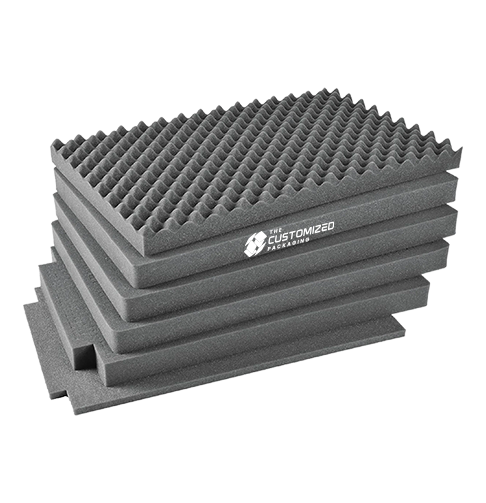
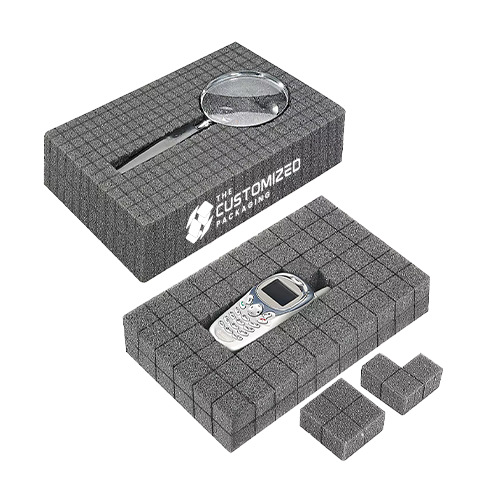
Pick and pluck foam is divided into small pre scored cubes or sections. You mark the product outline on the grid, then remove selected cubes by hand. The remaining foam becomes walls around the item. A solid base pad under the pluck layer stops products from dropping through the grid.
Cavities are usually rectangular or stepped. They follow the cube grid, so they will not match a fine CNC outline. That is expected. Pluck foam is for adjustable kits, prototypes, changing tool sets, demonstration packs, and case interiors that may be rearranged later.
| Product format | Cavity consideration | Useful foam layout |
|---|---|---|
| Hand tools or accessories | Varying lengths; occasional rearrange | Single pluck layer; generous side margin |
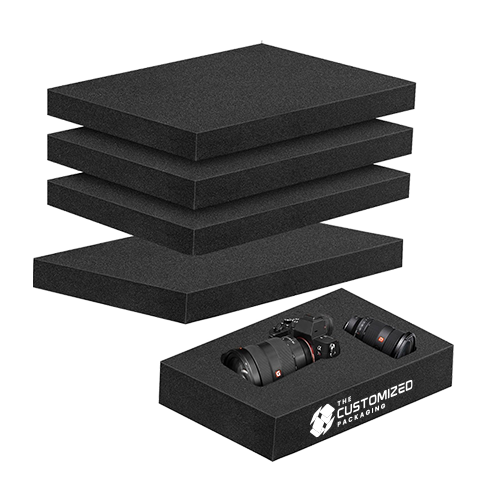
| Camera or optic kit | Lens height and soft contact | Deeper cavity; optional top pad |
| Electronics module | Ports and cable clearance | Stepped cavity; leave cube walls at connectors |
| Instrument or gauge | Dial face and weight | Firm density quote; solid base pad |
| Sample or demo assortment | Multiple small footprints | Multi cavity pluck grid in one tray |
| Collectible or presentation piece | Centered reveal and print match | Pluck well inside a rigid presentation box |
Cavity Depth, Bottom Pad, and Lid Clearance
Cavity depth should clear product height with a small vertical margin so the lid closes without crushing tops. A bottom pad supports weight and separates the product from the outer carton floor. A flat or convoluted top pad can stabilize tall items when the lid opens and closes often.
Foam margin is project specific. Narrow walls tear more easily when cubes are removed beside sharp tools. Wider margins keep the grid stable for repeated packing. Share real product samples or drawings when walls look thin on paper.
- Product L W H and protruding parts
- Item count and single versus multi cavity plan
- Foam margin preference around each item
- Cavity depth, bottom pad, and top pad needs
- Outer box style and internal size target
- Intact pluck sheet versus prepared layout
Pluck Foam Versus Factory Cut Foam Inserts
Pluck foam gives buyer control: cubes stay until you remove them, so one insert can serve changing kits. Factory cut foam (often EVA or polyethylene) is machined or die cut to a supplied outline for repeat production and tighter walls.
Choose pluck foam for configurable cavities and moderate precision. Choose factory cut foam when every unit must match an exact silhouette, narrow wall, or branded cavity shape. Soft foam sheets without a scored grid are for cushioning pads, not hand formed compartments. If a kit starts as pluck foam and later locks into a fixed layout, many brands move that repeat run to factory cut foam while keeping the same outer box dieline.
| Insert approach | Buyer control | Best use |
|---|---|---|
| Pick and pluck foam | Remove cubes by hand | Changing kits, prototypes, adjustable cases |
| Factory cut foam | Cavity made to drawing | Repeat runs and exact outlines |
| Paperboard or corrugated insert | Fixed die cut wells | Retail cartons without foam |
| Soft foam pad | Layer thickness only | Simple cushioning without cavities |
| Prepared pluck layout | TCP removes cubes to an approved map | Consistent kits with pluck style foam |
| Customer configured pluck | Intact grid shipped blank | Field fitting and kit evolution |
Outer Box Structures for Foam Filled Packs
Pluck foam can sit in corrugated mailers, rigid presentation boxes, sleeve and tray packs, hinged cartons, or selected customer supplied cases. Match board strength to packed weight and handling. A light sample kit does not need the same outer carton as a tool set. Heavy instruments may need a stiffer flute or a rigid shell so the foam walls stay square in transit.
Outside print, logos, and finishes apply to the outer box when ordered together. The foam itself is usually unmarked. Leave label space when the pack ships as the outer carton. When the foam ships alone for a case the customer already owns, confirm the internal case length, width, and depth so the sheet seats without bowing.
Measurements Needed Before a Dieline
Before artwork locks, confirm product dimensions, weight, cavity map, foam margin, layer count, base and top pad needs, outer box style, internal box size, print plan, and quantity. Foam chemistry and density are quoted per project. Common pluck programs use polyurethane foam, but exact grade must be confirmed.
Standard pluck foam does not by itself provide electrostatic control or a sealed barrier against wet lanes, and it is not a substitute for carrier testing. If electrostatic control is required, request a suitable specified foam and document it before production. Estimate ranges with the custom box packaging cost calculator, then send the same measurements for a firm quote.
Pluck foam is a pre scored foam grid. You remove selected cubes by hand to form cavities around products. A solid base pad under the grid keeps items from falling through.
Start with product length, width, and height, then add foam margin on each side, cavity depth for the product height, and space for bottom and top pads. Share those numbers with the outer box preference.
Pluck foam uses removable cubes for adjustable cavities. Custom cut foam is machined or die cut to a fixed outline for repeat precision. Use pluck for changing kits; use cut foam for exact silhouettes.
Yes. One pluck sheet can hold several cavities when product footprints and foam margins fit the grid. Share an item list and layout sketch for a prepared or blank sheet quote.
Yes for seating many electronics modules and accessories. Standard pluck foam does not by itself provide electrostatic control. If that control is required, request a suitable specified foam before production.
Related Products


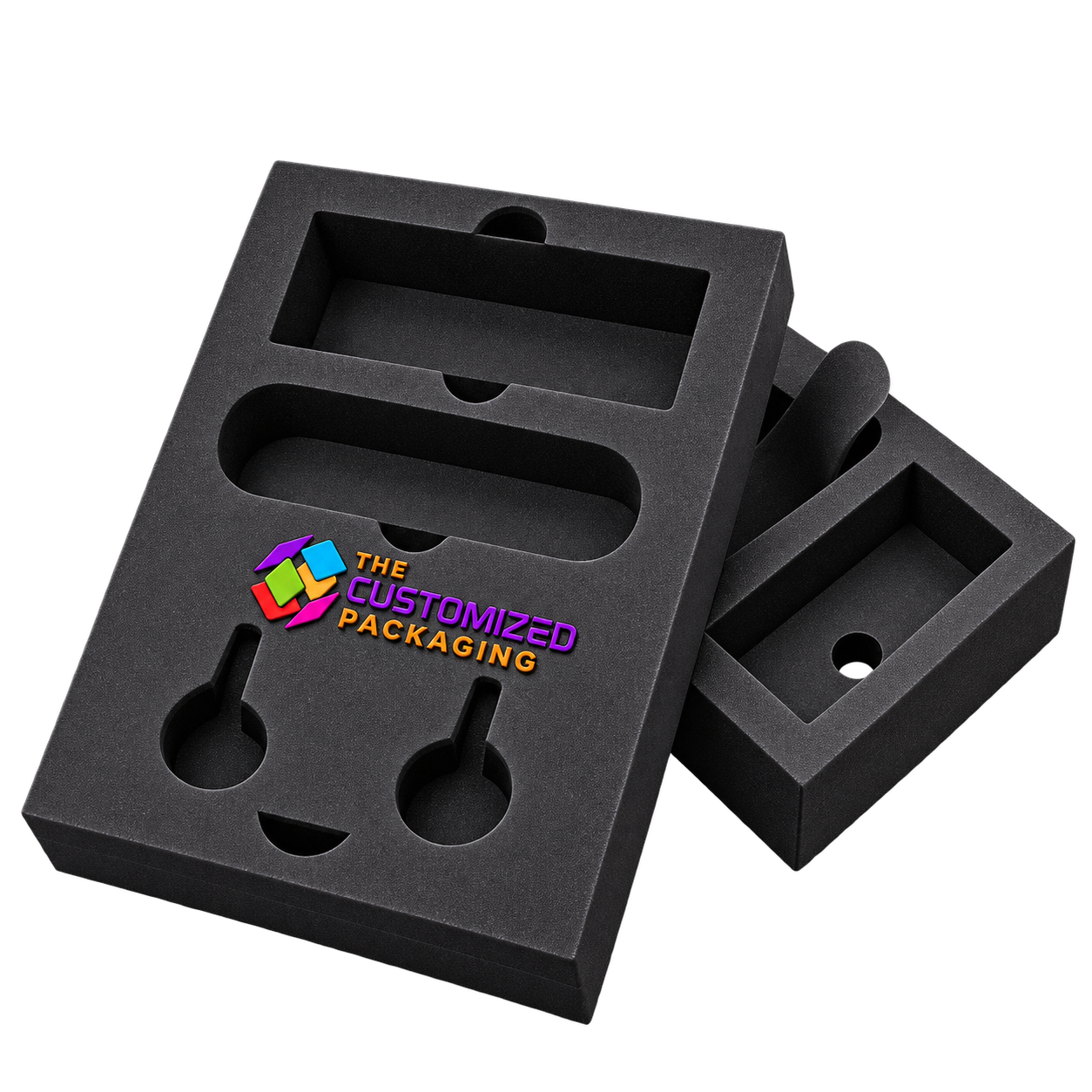


Order Custom Pluck Foam Inserts from The Customized Packaging
We manufacture Custom Pluck Foam Inserts for businesses that need reliable product protection, accurate printing, and professional packaging for retail, ecommerce, storage, or shipping. Each box can be customized by size, material, structure, printing, coatings, finishes, inserts, and order quantity.
Share your artwork and quantity targets for Custom Pluck Foam Inserts and we will recommend the most cost-effective structure for your timeline. or speak with a packaging expert.