


| Specification | Available Options |
|---|---|
| Product Name | Custom Food Box Sleeves |
| Applications | Meals, bakery products, takeout, frozen foods, confectionery and food gifts |
| Inner Packaging | Trays, cartons, tubs, bowls, clamshells and sealed containers |
| Materials | SBS, folding board, white kraft, natural kraft and micro-flute |
| Styles | Open-ended, belly band, full wrap, locking, window and tear-strip |
| Printing | CMYK, Pantone, digital, offset, flexographic and one-color |
| Features | Windows, cutouts, tear strips, QR codes and date-code areas |
| Finishes | Matte, gloss, aqueous, foil, embossing, debossing and spot UV |
| Quantity | Flexible minimums and wholesale production |
| Delivery | Available throughout the USA |
Printed Sleeves for Existing Food Packaging
Custom food packaging sleeves are printed paperboard wraps that fit around an existing tray, carton, tub, bowl, clamshell or sealed container.
The sleeve usually acts as a secondary branding and information layer rather than the primary package holding the food. This allows businesses to use one standard inner container while changing the outer sleeve for different flavors, recipes, retailers, events or seasonal promotions.
The completed inner package should be measured before the sleeve dieline is created. The dimensions must account for the lid, flange, closure tabs, taper, film edge, handle and any labels already applied to the container.
Food Sleeve Styles
| Sleeve Style | Recommended Application |
|---|---|
| Open-ended sleeve | Ready meals, frozen products and retail trays |
| Belly band | Bakery boxes, sandwiches, gifts and promotional packaging |
| Full-wrap sleeve | Grocery products and premium retail presentation |
| Locking-tab sleeve | Manual packing and short production runs |
| Pre-glued sleeve | Restaurants and higher-volume packing |
| Window sleeve | Bakery, confectionery and colorful prepared foods |
| Tear-strip sleeve | Guided opening and tamper-indicating applications |
| Tray-and-sleeve structure | Desserts, confectionery and premium food collections |
| Corrugated sleeve | Larger meal cartons and heavier products |
The selected structure should fit securely without lifting the container lid, damaging the film seal or covering opening tabs.
Paperboard Materials
| Material | Recommended Use |
|---|---|
| SBS paperboard | Detailed retail graphics and colorful food branding |
| Folding boxboard | Lightweight sleeves and higher-volume production |
| White kraft board | Bright restaurant and private-label artwork |
| Natural kraft board | Bakeries, farm products and minimalist branding |
| Recycled paperboard | Selected secondary-packaging applications |
| Coated paperboard | Defined chilled or moisture-exposure conditions |
| Micro-flute cardboard | Larger trays and reinforced food packaging |
Material thickness depends on the sleeve dimensions, inner-container rigidity, window size, storage conditions and application method.
Meal Tray and Ready-Food Sleeves
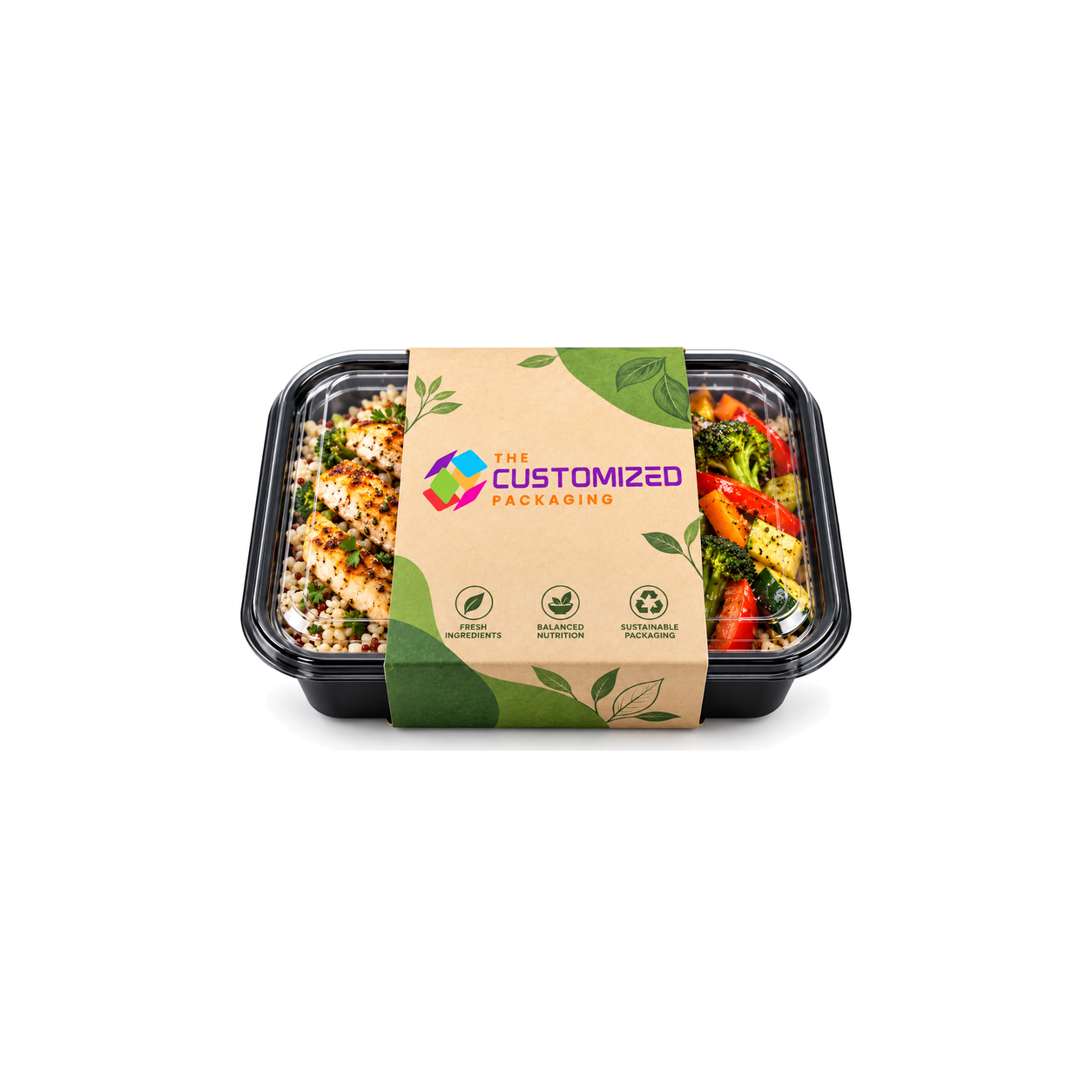
Meal tray sleeves can surround sealed trays used for ready meals, meal-prep products, refrigerated foods and grocery lines.
The printed panels can display the meal name, ingredients, nutritional information, preparation guidance, storage instructions and brand artwork. Openings can be added to provide access to a film corner, lid tab or existing container label.
A paperboard sleeve does not control product temperature and should be removed before heating when required by the food brand’s preparation instructions.
Bakery and Confectionery Sleeves
Bakery box sleeves can wrap plain cookie, pastry, donut, cupcake, cake-slice and dessert cartons.
A bakery can use the same unprinted inner box throughout the year while changing sleeves for Christmas, Valentine’s Day, weddings, corporate events or limited-edition products.
Windows may be added to reveal the existing carton or product area. The food should remain inside an appropriate inner tray, liner, wrapper or carton when direct-contact suitability has not been established.
Takeout and Restaurant Sleeves
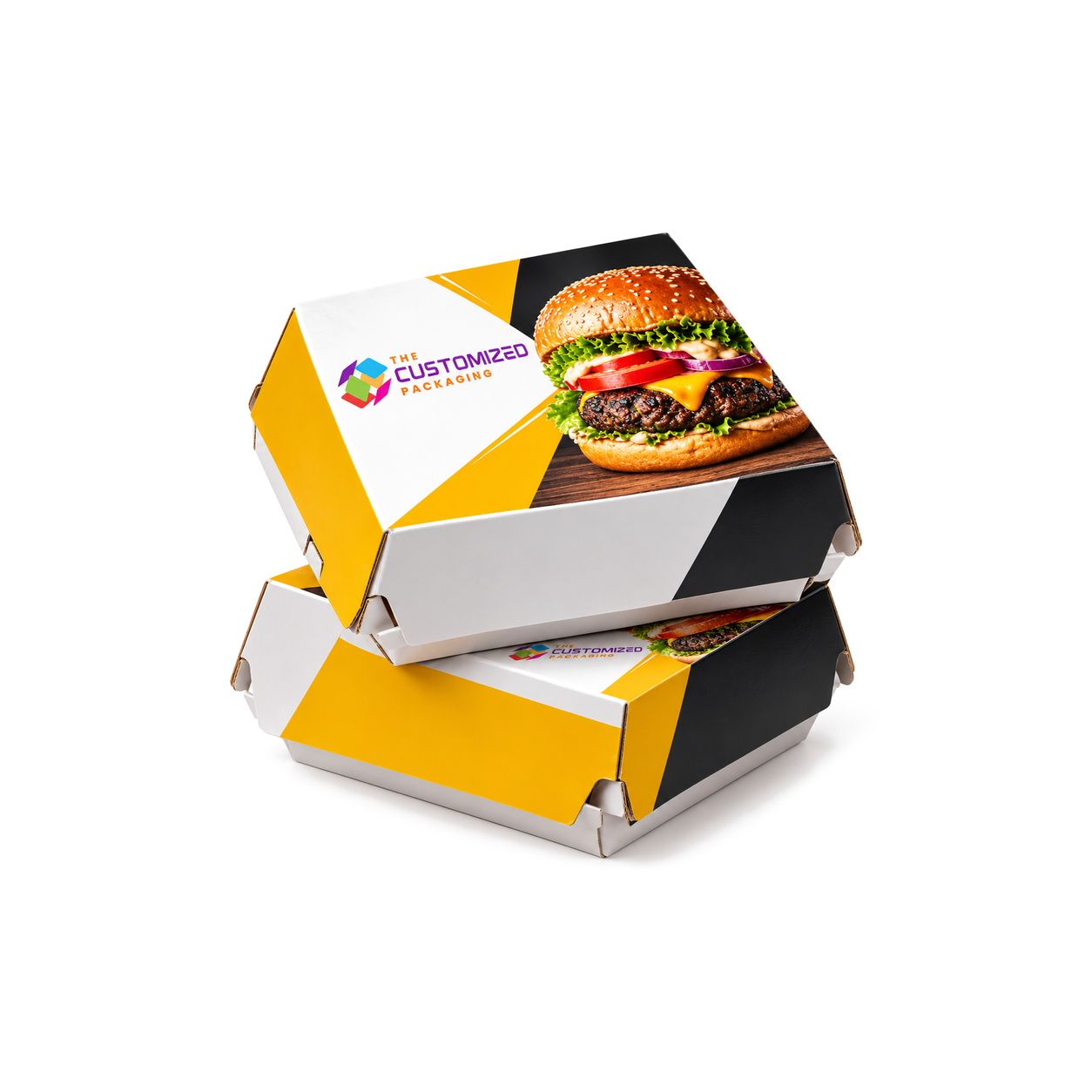
Takeout box sleeves provide additional branding around clamshells, meal containers and closed restaurant boxes.
They can display a restaurant logo, menu item, customer name, order number, QR code, reheating guidance or promotional offer. The sleeve should not block container vents, lid locks, handles or tamper-evident labels.
A locking band or tear strip may provide visible evidence that the sleeve has been opened, but it should be described as tamper-indicating rather than tamper-proof.
Frozen and Refrigerated Food Sleeves
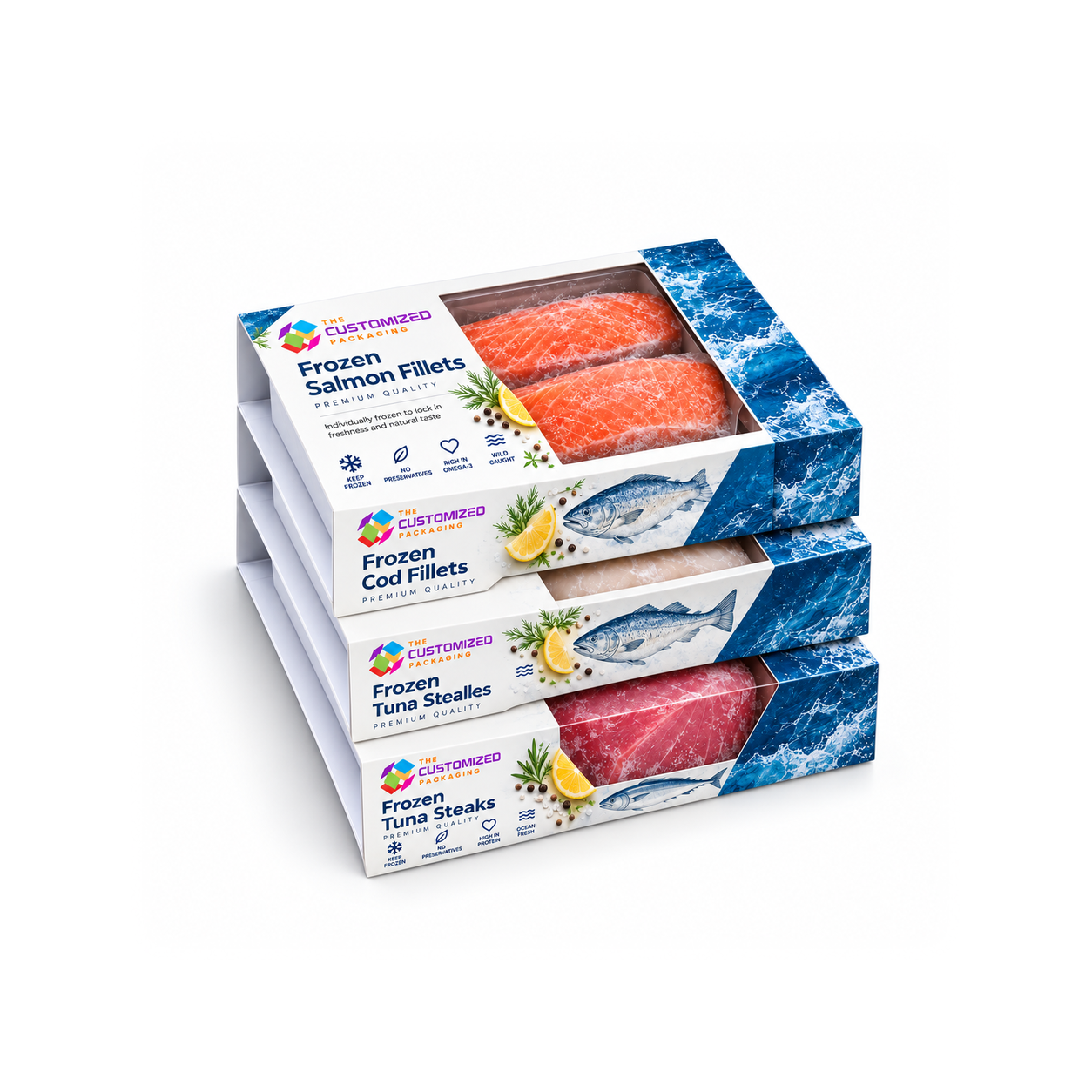
Frozen food sleeves require materials and seams selected for the intended storage conditions.
Condensation and freezer exposure can affect board stiffness, glue seams, labels, writable date fields and tear strips. The finished sleeve should therefore be tested with the actual container under the expected temperature and storage duration.
Claims such as freezer-safe, moisture proof or greaseproof should only be used when the precise completed structure has been verified.
Logo Printing and Product Information
Food box sleeves with logo printing help brands distinguish different meals, flavors, portion sizes and product lines.
Artwork can include full-color graphics, product photography, ingredients, allergen statements, nutrition panels, preparation directions, storage guidance, barcodes, QR codes, batch fields and retailer details.
Food labelling is required for most prepared packaged foods, and major food allergens must be identified where applicable. The responsible food business should supply and approve all regulatory wording before printing.
Windows, Cutouts and Opening Features
Open or film-covered windows may be added in rectangular, circular, curved or custom shapes.
Cutouts can expose container handles, lid tabs, film corners, labels or product-viewing areas. Enough board should remain around each opening to maintain sleeve strength.
Thumb notches, perforated panels, tear strips and locking tabs can also be incorporated according to the packing process.
Food-Contact Considerations
The sleeve will normally wrap around a suitable primary food container. If any paperboard, ink, coating, adhesive or window component may contact exposed food, the exact intended use must be reviewed.
FDA identifies packaging components, adhesives and colorants among substances that may qualify as food-contact materials and require authorization for their intended applications.
Avoid stating that every sleeve is universally food-safe, greaseproof or leakproof.
Wholesale Pricing
Ordering wholesale food sleeves can reduce the average unit cost because design, tooling and printing expenses are distributed across more units.
Pricing depends on the assembled container dimensions, sleeve coverage, material, structure, windows, cutouts, printing, artwork versions, finishes, quantity and delivery destination.
Different recipe or flavor versions may use one structural dieline with separate artwork files when the container dimensions remain identical.
Why Choose The Customized Packaging?
The Customized Packaging develops cardboard food sleeves around the actual tray, carton, tub or container rather than applying one standard wrap to every product.
Our team can assist with container measurements, sleeve fit, materials, windows, locking tabs, dielines, artwork placement and printed proofs.
Share the assembled package dimensions, food type, storage conditions, quantity, artwork and delivery address to receive project-specific pricing.
Yes. Provide an assembled container sample or its exact outside dimensions, including the lid, flange, taper and closure tabs.
Yes. Sleeves can display logos, ingredients, allergens, preparation directions, nutrition information, barcodes and QR codes supplied by your business.
The same structural dieline may support different artwork versions when every product uses an identical inner container.
Selected materials may be used for frozen applications after the sleeve, seam, printing and opening features have been tested under the intended storage conditions.
No. The inner tray, carton, pouch or tub normally provides the primary food containment, grease and moisture performance.
Related Products









Order Custom Food Box Sleeves from The Customized Packaging
We manufacture Custom Food Box Sleeves for businesses that need reliable product protection, accurate printing, and professional packaging for retail, ecommerce, storage, or shipping. Each box can be customized by size, material, structure, printing, coatings, finishes, inserts, and order quantity.
Share your artwork and quantity targets for Custom Food Box Sleeves and we will recommend the most cost-effective structure for your timeline. or speak with a packaging expert.