


| Specification | Available options |
|---|---|
| Product type | Custom Medicine Boxes as secondary unit cartons |
| Packaging role | Secondary carton around sealed primary medicine containers |
| Typical primaries | Bottles, blister cards, tubes, dropper packs, sealed unit packs |
| Product contact | Indirect when contents remain in the primary container |
| Sizing reference | Closed primary L/D × H, cap or pump height, leaflet, insert |
| Box styles | Straight tuck, reverse tuck, auto lock, sleeve and tray, collar carton |
| Materials | SBS, folding board, kraft, micro flute as specified |
| Interior options | Bottle collar, blister rail, tray, leaflet pocket |
| Print fields | Buyer supplied name, strength, directions, warnings, barcode, QR, lot, expiry areas |
| Claim boundary | No FDA approved, sterile, medical grade, child resistant, or USP claims without evidence |
| Regulatory note | Brand owns labeling accuracy; TCP prints supplied artwork |
| Does not own | Bandage cartons, eye drop specialists, pharma multi unit displays, vitamin category pages |
| Quote inputs | Primary size, leaflet, insert, print, quantity, destination |
Secondary Cartons Around Bottles, Blisters, and Tubes
Custom Medicine Boxes sit outside a finished primary package. The bottle, blister card, tube, dropper pack, or sealed unit provides product contact and closure performance. The outer carton presents the SKU, holds a leaflet, and keeps the primary pack from sliding on shelf or in a shipper. Call this secondary packaging in the brief so expectations stay accurate.
Bandage boxes own wrapped dressing retail cartons. Eye drop boxes own dropper bottle specialists. Health care and vitamin pages own broader wellness lines. Pharmaceutical display boxes own multi unit counter displays. This URL owns unit cartons for medicine named secondary packs. Do not treat the paperboard outer as sterile, medical grade, or FDA approved packaging by itself.
Unsupported claims to avoid without verified evidence include FDA approved, FDA compliant, pharmaceutical grade, medical grade, sterile, maintains sterility, child resistant, tamper proof, antimicrobial, infection prevention, waterproof, moisture barrier, USP compliant, DEA compliant, and drug compliant. Tear seals or security features exist only when specified and tested for that structure. Marketing shortcuts that imply the outer carton itself treats or protects the drug create trust and compliance risk.
| Primary container | Measurement inputs | Carton fit focus |
|---|---|---|
| Round bottle with cap | Diameter, body height, cap height | Collar or snug tuck carton with vertical orientation |
| Pump or dropper bottle | Body plus actuator height | Extra headspace so the pump is not crushed |
| Blister card | Card L × W × blister dome height | Flat carton or rail support for the card |
| Tube | Tube length, crimp width, cap diameter | Long tuck carton or tray sleeve |
Include leaflet thickness and any inner tray. A carton that fits the bottle alone may fail when the folded leaflet is added. Ampoule trays and vial partitions need their own cavity map so glass units do not knock during pharmacy handling.
Opening direction should match packing line habits. Some lines load from the end; others drop the bottle from the top. Confirm tuck style and grain before printing large runs so erecting force stays consistent across shifts.
Organization Role Versus Display Role
Most medicine unit cartons exist to identify and protect one primary pack. Some programs add a window or hanging feature for retail. Multi unit pharmacy trays belong on display packaging pages, not on this unit carton brief.
| Secondary format | Organization role | Presentation note |
|---|---|---|
| Straight or reverse tuck | Standard unit carton with leaflet | Common retail and pharmacy outer |
| Auto lock bottom | Heavier bottle support | Useful when glass weight is higher |
| Sleeve and tray | Holds bottle or blister in a tray | Premium or kit style presentation |
| Collar insert carton | Centers bottle and reduces rattle | Helps pumps and tall caps |
For wrapped adhesive dressings and first aid stacks, see custom bandage boxes. For eye drop specialists, use custom eye drop boxes. Vitamin and broad health care assortment pages remain separate so medicine unit carton intent stays tied to secondary packs around sealed medicine primaries.
Print Panels Are Artwork Space, Not Certification
Buyer supplied artwork may include product name, strength, count, directions, warning areas, barcode, QR, lot field, expiry field, and serialization space. TCP prints the files provided. Printing those fields does not mean TCP certifies the medicine, validates claims, or replaces the brand’s regulatory process. Keep mandatory marks on quiet flat panels away from folds and heavy varnish.
- Primary container type and closed dimensions
- Cap, pump, or dropper height
- Leaflet size and fold thickness
- Insert collar or tray yes or no
- Orientation on shelf
- Artwork fields reserved for lot, expiry, and codes
Private label and contract pack programs should freeze panel templates early so strength, count, and warning blocks stay in consistent locations across SKUs. Moving mandatory fields late in the artwork cycle is a common cause of rushed reprints and barcode collisions.
What the Outer Carton Does Not Do
The carton does not create a sterile barrier, child resistance, or moisture barrier unless a verified complete system is specified and tested. Tamper indicating features should be described accurately as indicating opening, not as impossible to open. Prefer factual language: secondary carton for organization and label space around an already sealed primary pack.
Serialization and DataMatrix areas need flat, high contrast panels with enough quiet space for scanners. Do not place variable codes across scores, emboss peaks, or soft touch zones that reduce contrast. If braille or accessibility marks are required, the brand must supply the specification and approve placement. TCP converts artwork; it does not invent regulatory layouts.
Contract packers often need cartons that erect quickly on automated lines. Grain direction, glue flap length, and opening direction should be confirmed against the packing line before artwork is locked. A beautiful retail face that fights the machine is still a failed pack.
Quote Inputs Before the Medicine Dieline
Send primary pack drawings or samples, leaflet thickness, insert needs, print files, quantity, and USA delivery location. Estimate board ranges with the custom box packaging cost calculator after container dimensions are known, then confirm the dieline with a packed sample.
Honest medicine packaging cartons protect the primary pack and keep claim language inside verified limits. When the project is a multi unit pharmacy display, an eye drop specialist, or a bandage retail stack, brief those pages instead of widening this unit carton entity.
Usually no. They are secondary cartons around a bottle, blister, tube, or other sealed primary pack that holds the medicine.
No. Printing buyer supplied regulatory fields does not make TCP or the carton FDA approved. The brand remains responsible for product and labeling compliance.
Measure the closed primary container including cap or pump height, then add leaflet thickness and any collar or tray. Tablet count alone is not enough when a bottle or blister sets the footprint.
Yes, as artwork panel planning when those fields are in the buyer supplied files. Quiet flat areas work better than folds or heavy varnish zones.
No. Child resistant performance requires a specified and tested closure system. A standard tuck carton should not be described as child resistant. Bandage boxes remain a separate retail dressing entity.
Related Products


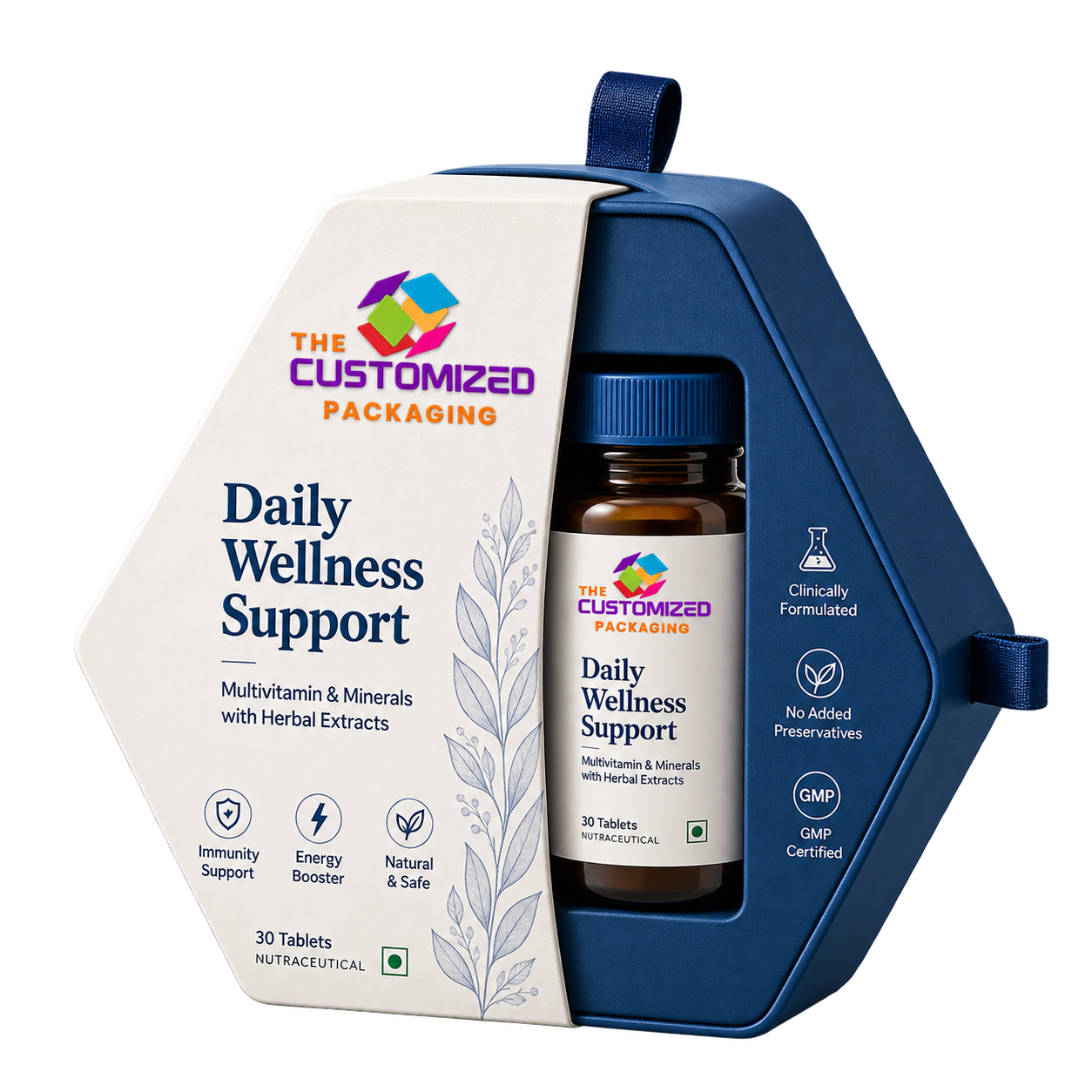

Order Custom Medicine Boxes from The Customized Packaging
We manufacture Custom Medicine Boxes for businesses that need reliable product protection, accurate printing, and professional packaging for retail, ecommerce, storage, or shipping. Each box can be customized by size, material, structure, printing, coatings, finishes, inserts, and order quantity.
Share your artwork and quantity targets for Custom Medicine Boxes and we will recommend the most cost-effective structure for your timeline. or speak with a packaging expert.