

| Specification | Options / Details |
|---|---|
| Product | Custom Vitamins and Supplements Packaging Boxes |
| Packaging Type | Custom printed secondary retail cartons and selected outer packaging structures |
| Primary Applications | Sealed vitamin bottles, supplement jars, blister packs, sachets, stick packs, and wellness kits |
| Materials | SBS, folding boxboard, kraft paperboard, selected recycled-content board, and suitable corrugated grades |
| Board Thickness | Selected according to box dimensions, packed weight, and structural requirements |
| Box Styles | Straight tuck, reverse tuck, auto-lock, suitable snap-lock, sleeve-and-tray, and selected mailer constructions |
| Dimensions | Custom length, width, and height based on the finished primary container and insert clearance |
| Closure Options | Tuck-end, locking-tab, auto-lock, and project-specific approved closures |
| Printing Methods | Digital, offset, CMYK, and selected spot-color printing, depending on stock and quantity |
| Print Areas | Exterior panels, selected interior panels, flaps, sleeves, and inserts |
| Artwork and Branding | Customer-supplied logos, product identification, ingredient information, Supplement Facts, warnings, and approved graphics |
| Surface Finishes | Matte, gloss, embossing, debossing, foil, and compatible specialty treatments |
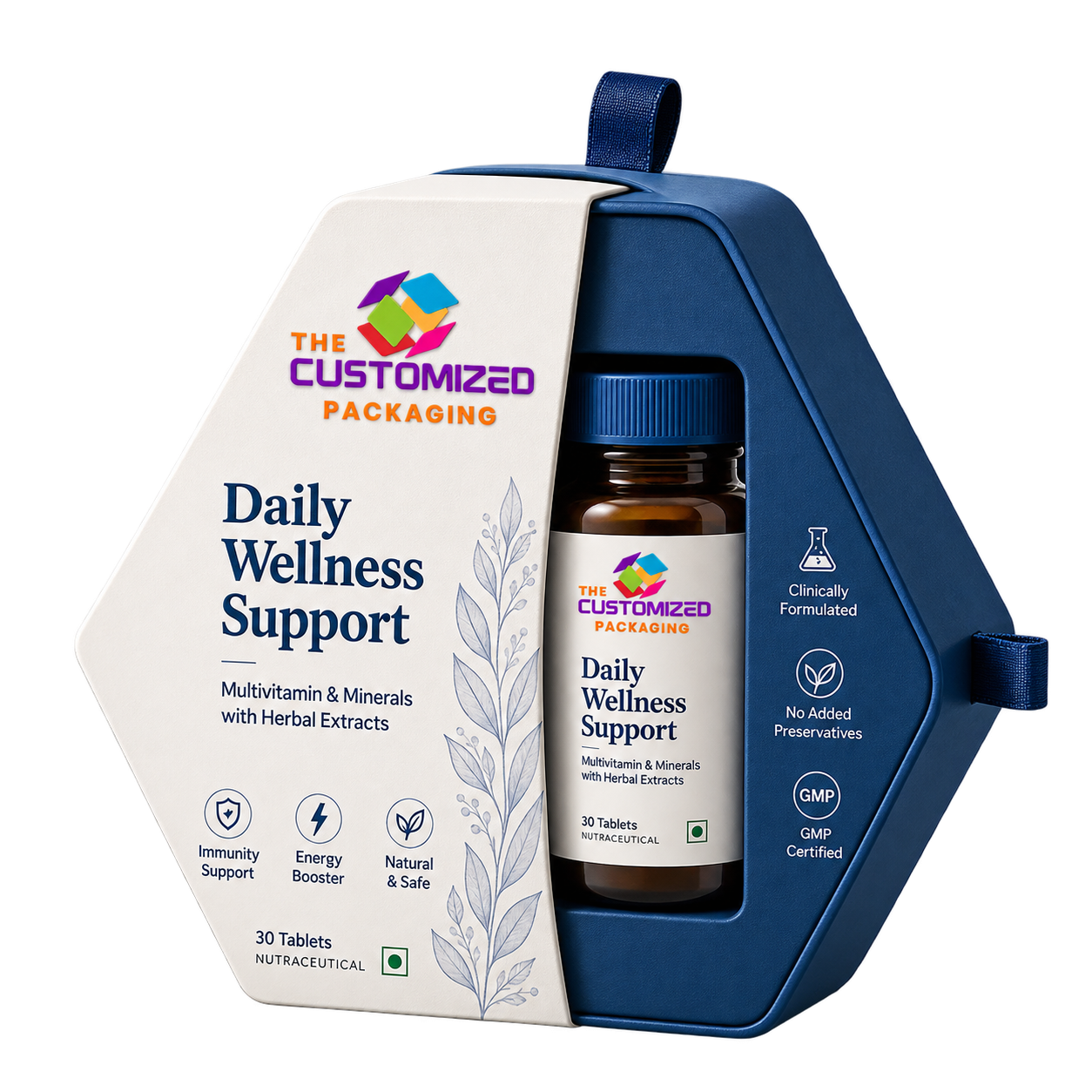
| Custom Inserts | Paperboard bottle collars, die-cut platforms, corrugated dividers, and suitable fitted compartments |
| Additional Features | Leaflet pockets, sachet organization, selected display windows, and project-specific tamper-evident components |
| Primary Product Contact | Designed primarily as secondary packaging around an appropriate sealed primary container |
| Regulatory Artwork | Provided, verified, and approved by the responsible supplement brand |
| Supply Format | Flat-packed or structurally appropriate assembled formats, depending on box design |
| Minimum Order Quantity | Generally starting at 100 units for eligible configurations; higher minimums may apply |
| Artwork Files | Print-ready PDF, AI, EPS, or another approved production format |
| Proofing | Digital artwork proof, with structural or printed samples reviewed according to project requirements |
| Production and Delivery | Timeline confirmed after specification and artwork approval; USA delivery quoted by destination |
| Wholesale Pricing | Project-specific quotation based on size, materials, printing, finishes, inserts, quantity, and destination |
Custom Vitamins and Supplements Packaging Boxes for Retail and Ecommerce
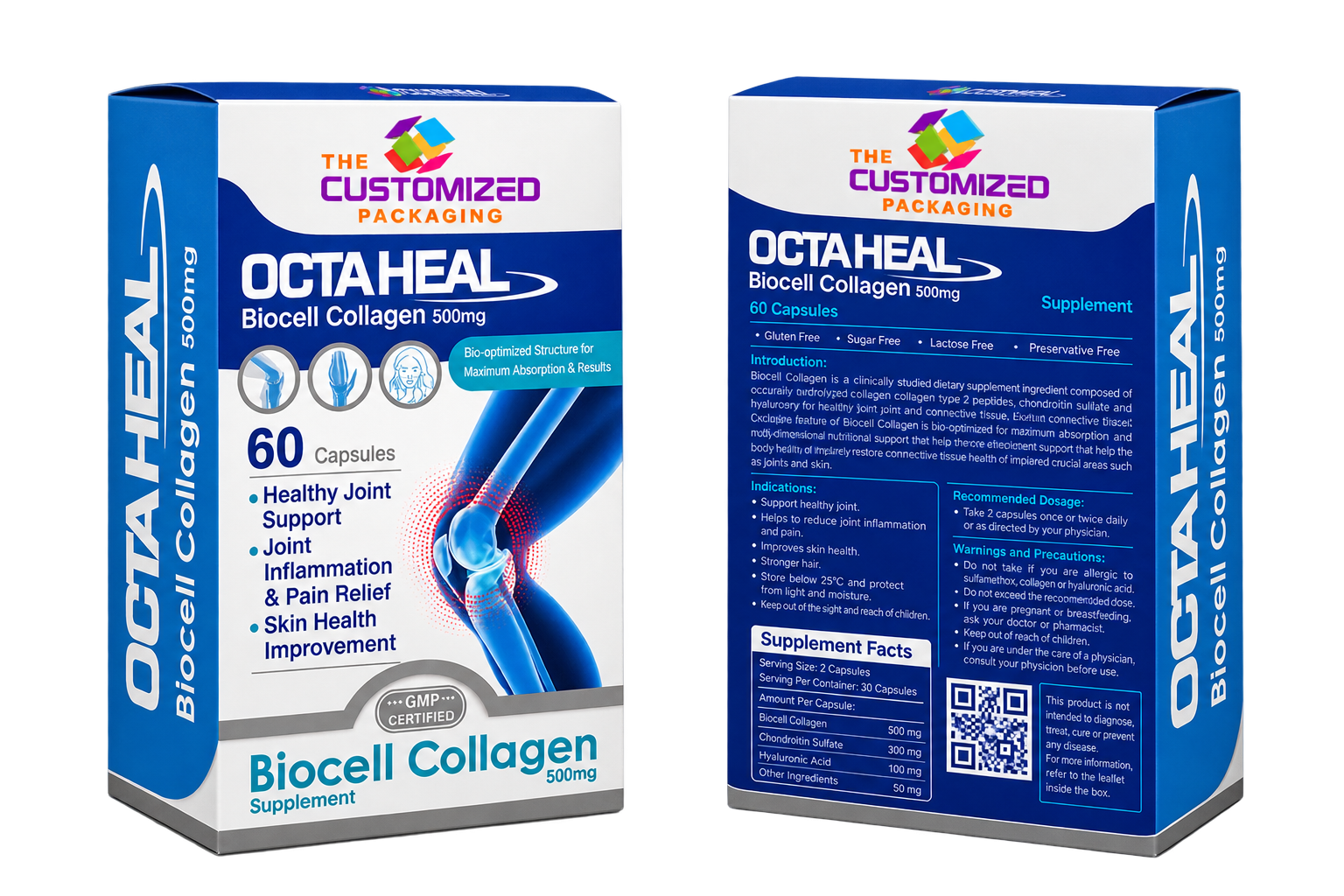
Custom vitamins and supplements packaging boxes are printed secondary cartons designed to hold, organize, and present sealed vitamin bottles, supplement jars, blister cards, sachets, stick packs, and wellness kits. They provide space for brand identification, product information, and coordinated retail graphics while helping keep the primary containers properly arranged.
At The Customized Packaging LLC, we develop custom supplement cartons around the actual product dimensions, packed weight, packaging format, printing requirements, and order quantity. Businesses can choose suitable paperboard or corrugated materials, different closure styles, protective inserts, and custom finishes according to the intended use.
These cartons are generally secondary packaging. The primary bottle, blister, pouch, or sealed container is responsible for direct product containment and any required barrier performance. An outer printed box does not automatically establish shelf life, product safety, or regulatory compliance.
Packaging Options for Vitamins, Capsules, Powders, and Wellness Products
Supplement products come in different forms, and each requires a packaging structure suited to its primary container. A single vitamin bottle may use a straightforward folding carton, while a collection of daily supplement packets may require compartments or a dispensing arrangement.
Custom vitamin boxes can be developed for multivitamins, mineral supplements, gummies, capsules, probiotics, protein powder samples, collagen products, wellness sets, and other products packaged in suitable primary containers.
For bottles, blister cards, and tablet-based products, brands can also compare our custom pill boxes. The packaging structure should be selected around the primary container, required information panels, and product dimensions.
Supplement Packaging Format Comparison
| Supplement Format | Recommended Box Structure | Important Design Consideration |
|---|---|---|
| Vitamin and capsule bottles | Straight-tuck or reverse-tuck cartons | Bottle diameter, cap clearance, and stability |
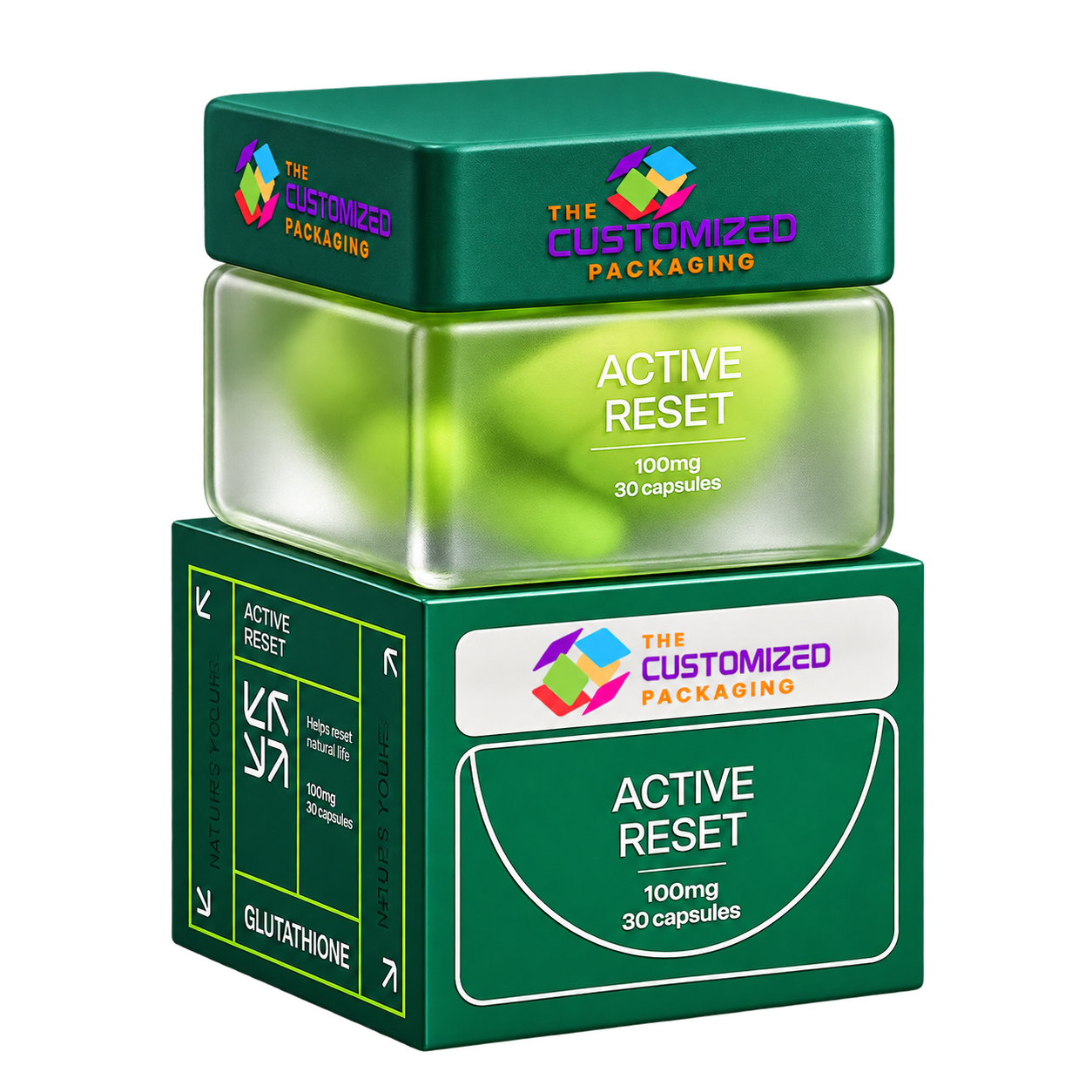
| Gummy supplement jars | Folding cartons with optional bottle supports | Container weight, lid clearance, and fit |
| Blister-packed supplements | Shallow folding cartons or sleeves | Blister depth and protection of sealed cavities |
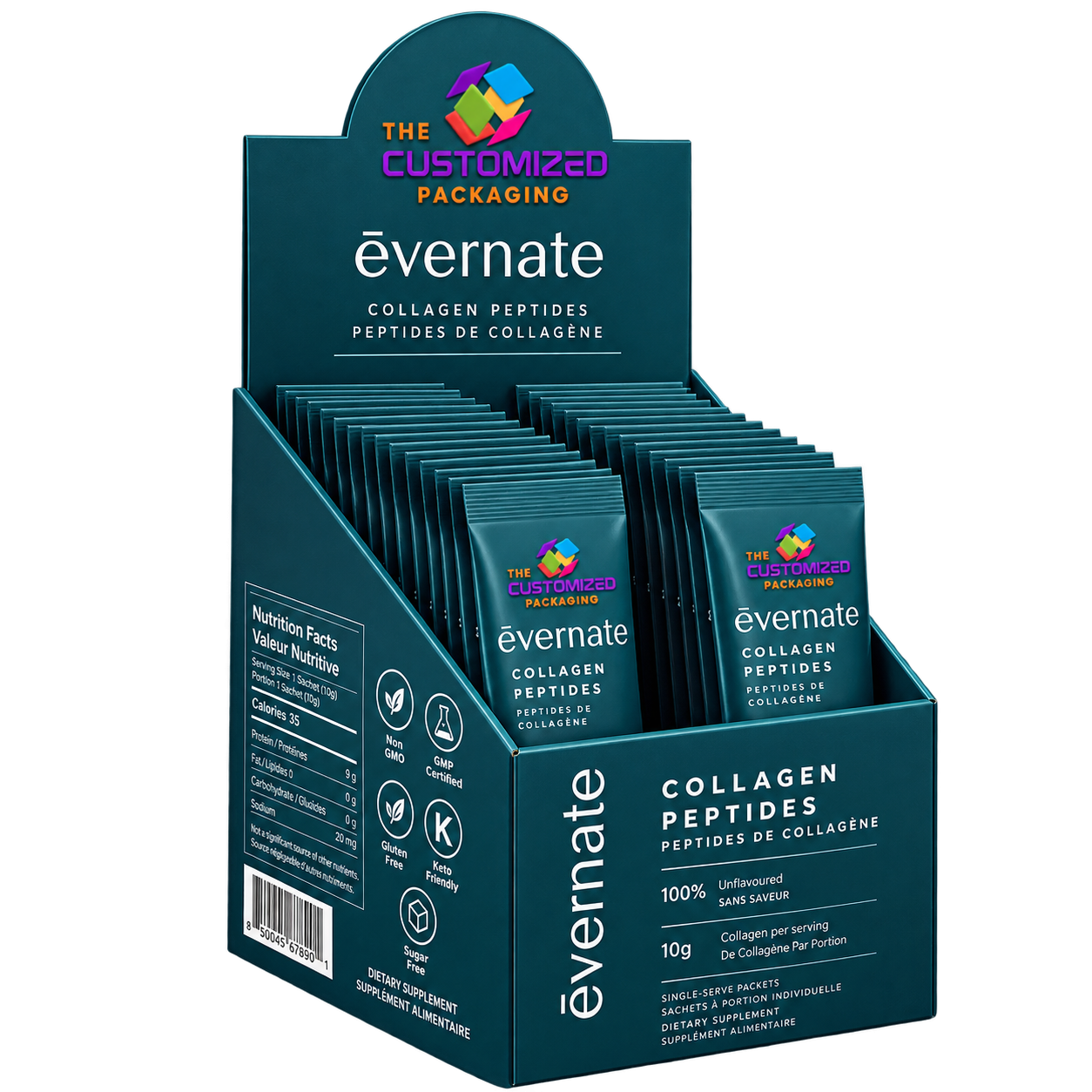
| Powder sachets | Compartment or dispenser-style cartons | Packet dimensions, count, and access |
| Stick-pack supplements | Vertical retail cartons or divided boxes | Packet length and organized removal |
| Supplement subscription kits | Corrugated mailers with fitted inserts | Multiple-item arrangement and shipment protection |
| Wellness sample collections | Sleeve-and-tray or presentation boxes | Product separation and unboxing experience |
These structures can be adjusted according to the product quantity, customer experience, retail requirements, and approved artwork. A finished sample may be useful when the packaging contains multiple products or unusually shaped containers.
Supplement Box Styles and Closure Options
Choosing the right box style affects product presentation, assembly time, packaging cost, and convenience during packing. Custom printed supplement boxes can use different closures and structures depending on the size and weight of the contents.
Straight Tuck and Reverse Tuck Boxes
These folding cartons are suitable for many lightweight vitamin bottles, capsule packs, and blister-card products. They can be supplied flat and assembled during packing. Straight-tuck and reverse-tuck arrangements differ in flap orientation, so the choice should reflect the dieline, artwork layout, and required opening direction.
Auto-Lock and Snap-Lock Bottom Boxes
Selected heavier jars and multipacks may benefit from reinforced bottom constructions. Auto-lock cartons use a pre-glued base that forms during setup, while snap-lock cartons use manually interlocking bottom flaps. The correct construction depends on packed weight, board strength, box dimensions, and assembly requirements.
Sleeve-and-Tray Presentation Boxes
Sleeve-and-tray packaging can create a more organized presentation for wellness sets, multiple supplement products, or limited-edition collections. Inserts may separate bottles, sachets, and accessories within the tray.
Corrugated Mailers and Subscription Packaging
Corrugated mailers can be considered for subscription programs and ecommerce orders containing multiple supplement products. An appropriate outer shipping carton and protective components should be selected according to handling conditions and the actual packed contents.
No standard folding carton should be assumed to provide child resistance, tamper evidence, or guaranteed shipping protection without a validated packaging design.
Paperboard, Kraft, and Corrugated Material Comparison
The material used for supplement packaging boxes influences structural support, printed appearance, carton thickness, and cost. Material selection should begin with the product weight, internal dimensions, printing requirements, and intended packing method.
Smooth white paperboard is suitable for detailed graphics and information panels, while natural kraft can support a more understated visual style. Corrugated board adds a fluted construction that may be appropriate for heavier kits and outer packaging.
Material Options for Custom Supplement Cartons
| Material | Typical Characteristics | Suitable Applications | Selection Consideration |
|---|---|---|---|
| SBS paperboard | Smooth white surface for detailed printing | Premium vitamin and supplement cartons | Confirm board thickness and coating |
| Folding boxboard | Lightweight folding-carton construction | Standard supplement retail boxes | Match board grade to packed weight |
| Natural kraft paperboard | Brown paper appearance | Minimalist wellness packaging | Review ink contrast and label readability |
| White kraft board | Bright printing surface | Selected branded retail cartons | Verify stock availability and fold performance |
| Recycled-content paperboard | Selected grades incorporating recovered fiber | Documented material-preference projects | Confirm actual recycled-content specifications |
| E-flute corrugated board | Compact fluted construction | Small kits and reinforced cartons | Review fit, printing, and structural support |
| B-flute corrugated board | Thicker corrugated profile | Outer shipping boxes and larger kits | Consider handling, stacking, and total load |
The most suitable material is not necessarily the thickest or most expensive. It should deliver the required structural performance while accommodating the approved graphics and packaging format.
To compare related healthcare packaging structures, explore our pharmaceutical packaging options. Material and carton specifications should still be selected for the actual supplement product rather than copied from an unrelated healthcare package.
Custom Sizes, Vitamin Bottle Fit, and Structural Requirements
Custom vitamin bottle boxes should be designed around the finished primary container, including its cap, label, tamper-evident band, and any attached accessories. The stated bottle capacity does not provide enough information to determine the correct carton dimensions.
For blister packs, measurements should include the card length, width, and maximum cavity depth. Sachets and stick packs need adequate clearance for their packet count and arrangement. Multi-product kits may require additional space for dividers, accessories, and printed information.
When preparing packaging measurements, provide:
- Finished primary container length, width, and height, or diameter and height
- Cap, seal, shoulder, and label dimensions
- Total filled product weight
- Number of containers or packets in each box
- Required shelf orientation and opening direction
- Insert, divider, or leaflet requirements
- Expected storage, handling, and shipping conditions
Internal dimensions should allow the product to fit without excessive pressure on its cap, seal, label, or blister cavities. Oversized boxes can allow unnecessary movement, while overly tight cartons may be difficult to assemble or open.
Product-loaded samples help confirm the fit, assembly sequence, and insert arrangement before a larger production run.
Custom Printing, Logo Branding, and Premium Finishes
Custom supplement boxes with logo can carry brand graphics, product names, variant information, barcodes, QR codes, and other approved artwork. A consistent packaging system helps customers recognize related products while allowing each formula, serving size, or flavor to have a distinct identity.
Depending on the material and production requirements, printing options may include digital or offset methods, CMYK graphics, and selected spot colors. Exterior panels, interior surfaces, flaps, sleeves, and inserts may offer branding opportunities where the construction allows.
Surface finishing can include matte or gloss treatments, embossing, debossing, foil stamping, and compatible specialty effects. Decorative finishes should be reviewed against the selected board and should not interfere with folding, opening, barcode scanning, or important product information.
For a supplement range with multiple SKUs, the design can use a consistent structural format while varying printed artwork. The number of artwork versions should be supplied during quotation because it can influence setup and production requirements.
Supplement Facts Panels, Labeling, and Artwork Approval
Supplement cartons may need to display product identification, a Supplement Facts panel, ingredient information, directions, warnings, company information, barcodes, and traceability details, depending on the applicable product and market requirements.
The Customized Packaging LLC can print supplied and approved labeling artwork. The supplement brand or its qualified regulatory adviser is responsible for determining which declarations are required, verifying the accuracy of product statements, and approving the final labeling content.
Manufacturing a printed carton does not mean the packaging manufacturer has approved the supplement, verified its dosage, or certified its compliance with FDA requirements.
Supplement packaging should also be distinguished from medicine packaging, which may involve different labeling, safety, and regulatory requirements. For medicine-specific carton applications, see our custom medicine boxes. The responsible product company must verify the requirements applicable to its own product.
Planning Legible Product Information
Information panels should be considered before the dieline and printing layout are finalized. Important text should not be obscured by folds, glued seams, windows, decorative foil, closing tabs, or added labels.
Print proofs should be checked for panel position, text size, contrast, artwork accuracy, and barcode placement. Where lot numbers, expiration details, or variable coding are added after printing, a suitable area and compatible surface should be reserved.
All regulatory statements and required product details should come from the responsible brand's approved artwork rather than being generated or assumed during packaging design.
Custom Inserts for Vitamin Bottles and Supplement Kits
Protective inserts can help maintain product position and organize multiple items within a carton. The appropriate insert depends on the dimensions, weight, fragility, and intended presentation of the primary containers.
Available insert concepts may include:
- Die-cut paperboard collars: Hold individual supplement bottles in position.
- Corrugated dividers: Separate multiple containers in a wellness kit.
- Blister-card supports: Organize sealed cards without unnecessary bending.
- Sachet compartments: Maintain a defined packet arrangement.
- Presentation platforms: Raise selected items for organized display.
- Leaflet pockets: Provide dedicated space for additional printed information.
Inserts should be designed around the actual filled containers. A paperboard holder may help limit movement, but it does not automatically prevent breakage or provide sufficient protection for every shipping method.
For products containing glass jars or several heavy items, additional cushioning, structural reinforcement, or a separate outer carton may be necessary.
Retail, Ecommerce, and Subscription Supplement Packaging
Retail supplement packaging should support recognizable branding, readable product information, stable shelf placement, and convenient customer handling. The outer carton should be sized and oriented for the finished product rather than selected solely for its visual appearance.
Ecommerce fulfillment creates different requirements. A lightweight folding carton may provide a suitable retail presentation but still need another shipping package to protect it during parcel handling.
For orders that require an additional shipper, explore our custom corrugated shipping boxes. Board selection, cushioning, dividers, and outer dimensions should reflect the product weight, fragility, and expected distribution conditions.
Subscription programs may combine supplement bottles, stick packs, sample sachets, printed information cards, and accessories. A fitted corrugated mailer can help keep those components organized while allowing coordinated branding.
Brands should distinguish product presentation from preservation requirements. The appropriate primary container and validated storage system are responsible for product compatibility, moisture protection, and shelf-life performance.
Tamper-Evident Features and Packaging Safety Considerations
Some supplement projects may incorporate security labels, paper bands, tear strips, or other selected tamper-evident features. These options should be considered during structural development because they can influence closure design, artwork placement, and opening experience.
An ordinary tuck flap, decorative seal, or locking carton base should not be described as a validated tamper-evident or child-resistant feature without suitable design evidence and testing.
If the product requires a specialized closure or additional protection, those requirements should be communicated before the final dieline is approved. Some protective functions may need to be provided by the primary bottle, cap, blister system, or other validated packaging component.
Any safety or compliance claim must be supported for the finished packaging system and its intended product application.
Responsible Materials and Environmental Packaging Claims
Brands evaluating responsible packaging choices can consider right-sized cartons, selected recycled-content paperboard, paper-based inserts, and simplified structures that avoid unnecessary material.
The environmental characteristics of a finished box depend on more than its visible paper surface. Coatings, adhesives, window films, laminations, foil, labels, and inserts can affect the suitability of the package for different collection and recycling systems.
Recycled content, certification, recyclability, compostability, and biodegradability should be verified for the specific materials and the conditions in which the finished packaging will be used and disposed of.
Rather than assuming every paperboard carton is environmentally preferable, brands should review the product's protection needs, material specifications, and available disposal options.
Wholesale Supplement Packaging, MOQ, and Custom Quotes
The price of wholesale vitamin and supplement packaging boxes depends on carton dimensions, material grade, box construction, print coverage, finishing, custom inserts, order quantity, number of artwork versions, and shipping destination.
At The Customized Packaging LLC, the standard starting minimum is generally 100 units for eligible custom packaging configurations. Specialty materials, complex inserts, certain production methods, or multiple SKU requirements may involve higher minimum quantities.
Higher production quantities can reduce some setup costs per unit, but brands should also consider storage space, artwork revisions, and expected inventory turnover when deciding how many boxes to order.
Information Needed for Your Wholesale Quote
To prepare a product-specific quotation, share:
- Supplement type and primary container format
- Exact finished container dimensions
- Total packed product weight
- Preferred carton structure and material
- Printing colors and approved artwork
- Number of SKUs or artwork variations
- Insert, window, or specialty finish requirements
- Desired quantity and USA delivery ZIP code
- Any relevant deadline or handling requirements
If you are still comparing packaging options, use our Custom Box Packaging Cost Calculator for an initial budget estimate. Final manufacturing pricing and production timing are confirmed after reviewing the actual specifications, artwork, quantity, and delivery requirements.
Why Choose The Customized Packaging LLC?
The Customized Packaging LLC helps brands develop custom printed packaging around their products, branding, and ordering needs. We can assist with carton-structure selection, material comparisons, insert layouts, artwork placement, dieline preparation, and project-specific quotations.
Whether you are launching a private-label vitamin line, packaging existing supplement bottles, developing a multi-product wellness kit, or preparing several supplement SKUs for retail, the objective is to create a practical secondary package with clear manufacturing specifications.
Ready to order custom vitamins and supplements packaging boxes? Share your primary container dimensions, approved artwork, required quantity, and delivery location to request a wholesale quotation.
Custom supplement cartons can be designed to hold sealed vitamin bottles, supplement jars, blister cards, powder sachets, stick packs, and wellness kits. The box structure, dimensions, board grade, and inserts are selected according to the actual primary container, packed weight, and presentation requirements. These cartons are generally secondary packaging rather than direct-contact containers for the supplement itself.
Yes. We can print brand-supplied and approved Supplement Facts, ingredients, directions, warnings, barcodes, and other required artwork on suitable carton panels. The supplement brand or its qualified regulatory adviser is responsible for verifying labeling requirements, product claims, and compliance information. TCP does not independently create or certify supplement labeling content.
Yes. Depending on the box structure, custom inserts can include die-cut paperboard collars, bottle holders, corrugated dividers, blister-card supports, sachet compartments, and leaflet pockets. These features help organize products and limit unwanted movement. The final insert design should be reviewed with the actual filled containers, especially for heavy or fragile products.
Recyclability depends on the selected board, coatings, adhesives, windows, labels, and other components, as well as local recycling facilities. Selected paperboard and recycled-content options may be available, but not every finished supplement box is automatically recyclable, compostable, or biodegradable. We recommend confirming the material specifications before making environmental claims.
The Customized Packaging LLC generally starts at 100 boxes for eligible custom packaging configurations. Specialty materials, complex inserts, multiple artwork versions, or selected printing and finishing processes may require higher minimum quantities. Share your container dimensions, preferred box style, printing requirements, quantity, and USA delivery ZIP code for a confirmed quotation.
Related Products


Order Custom Vitamins and Supplements Packaging Boxes from The Customized Packaging
We manufacture Custom Vitamins and Supplements Packaging Boxes for businesses that need reliable product protection, accurate printing, and professional packaging for retail, ecommerce, storage, or shipping. Each box can be customized by size, material, structure, printing, coatings, finishes, inserts, and order quantity.
Share your artwork and quantity targets for Custom Vitamins and Supplements Packaging Boxes and we will recommend the most cost-effective structure for your timeline. or speak with a packaging expert.